
Tactile Membrane Keyboard Manufacturers
Keetronics (India) Pvt. Ltd. is an Indian manufacturer ofcustom tactile and non-tactile membrane switches and keyboards.
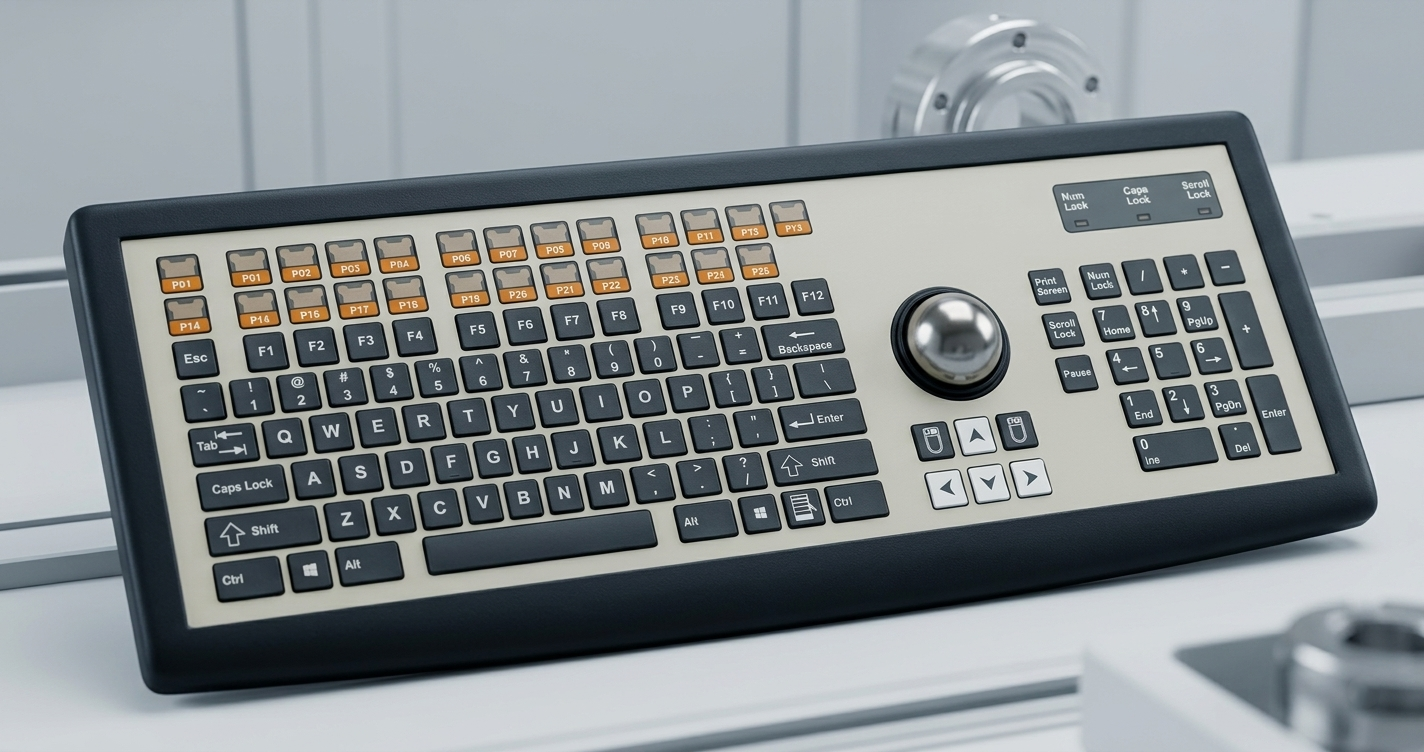
Keetronics ( India ) Pvt. Ltd. is a former Tactile and Non-Tactile Keyboards manufacturers and suppliers in India. In today’s growing technological world, there is a large adoption of machines and their components. To complete every demand and increase performance, we are offering our new technological tactile and non-tactile keyboards.
Both types of keyboards have multiple features that have been installed inside and made with strong-quality materials for performing also in outer conditions. Due to its all aspects, it can be used in multiple applications, such as household, consumer electronics and industrial uses.
Membrane keyboard manufacturing uses precision screen printing, thermal curing, and layer lamination. The core difference during manufacturing lies in inserting snap domes and thermo-embossing the graphic overlay for tactile models, while non-tactile variants skip these mechanical steps to maintain a completely flat, direct-contact profile.
Key Step-by-Step Manufacturing Process
-
Engineering & Material Design: Engineers layout the circuit traces, terminal pinouts, and key graphic overlays using CAD software. Polyester (PET) film or polycarbonate sheets are selected as the flexible base substrate for their durability and chemical resistance.
-
Screen Printing & Inking: Conductive silver or carbon inks are screen-printed onto PET sheets to form top and bottom circuit pathways. The graphic overlay artwork and key symbols are reverse-printed on the underside of a clear top layer to prevent key wear.
-
Thermal Curing: The printed substrate sheets pass through high-temperature curing ovens to dry the conductive and graphic inks completely, ensuring high conductivity and adhesion.
-
Tactile vs. Non-Tactile Feature Processing:
-
Tactile Models: Stainless steel snap domes or polyester polydomes are mechanically positioned over contact pads using clear adhesive carriers. A male/female die set uses heat and pressure (thermoforming) to raise/emboss key rims or domes into the graphic overlay.
-
Non-Tactile Models: Dome placement and heat embossing are omitted entirely, leaving the surface flat and smooth.
-
-
Precision Lamination: A die-cut spacer adhesive layer (containing cutouts over key contact points) is placed between the upper and lower circuit sheets. Pin alignment systems laminate the graphic overlay, circuit layers, spacer, and rear adhesive backing together under high-pressure rollers.
-
Quality Inspection & Die Cutting: Automated test fixtures measure circuit continuity, actuation force, and tail connector resistance. A steel-rule or laser die punches out the finished keypads to their exact outer dimensions.
Manufacturing Comparison
| Aspect | Tactile Membrane Keyboards | Non-Tactile Membrane Keyboards |
| Additional Processing | Steel dome placement & hot-die embossing | None (bypasses embossing and dome loading) |
| Tooling & Setup Cost | Higher due to embossing dies and dome loading fixtures | Lower due to standard flat printing and cutting |
| Key Feedback Mechanisms | Physical click/snap via metal or poly domes | Silent touch with zero tactile feedback (requires audio/LED cues) |
| Overall Thickness | ~0.8 mm – 1.5+ mm | ~0.5 mm – 1.0 mm (ultra-slim profile) |
| Actuation Lifespan | ~1 to 5 million key presses | ~5 to 10+ million key presses |
Keetronics (India) Pvt. Ltd. specializes in customized input devices and printed electronics. Their manufacturing process for tactile and non-tactile membrane keyboards follows precision screen printing and lamination techniques, differentiated primarily by the mechanical feedback elements integrated into tactile units.
Key Step-by-Step Manufacturing Process
-
Engineering & CAD Design: Schematic layout, circuit paths, tail pinouts, and graphic interface artwork are engineered using CAD tools. Substrates like flexible polyester (PET) or polycarbonate films are prepared.
-
Screen Printing & Ink Curing: Conductive silver or carbon inks are screen-printed onto PET films to create top and bottom circuit pathways. Graphic artwork is reverse-printed on the underside of top layers. Sheets are passed through high-heat drying tunnels for curing.
-
Tactile vs. Non-Tactile Feature Processing:
-
Tactile Keyboards: Stainless steel snap domes (or poly-domes) are aligned and secured over contact pads using specialized adhesive carriers. Thermoforming dies apply heat and pressure to emboss key rims or domes into the graphic overlay for physical click feedback.
-
Non-Tactile Keyboards: Dome placement and heat-embossing steps are omitted entirely, producing a smooth, completely flat, and silent interface.
-
-
Layer Alignment & Lamination: A die-cut spacer adhesive layer (isolating top and bottom contact points) is placed between circuit sheets. Layers are pin-aligned and laminated under high-pressure rollers alongside rear adhesives.
-
Testing & Final Shaping: Automated fixtures check electrical continuity, loop resistance, and actuation limits across the flexible tail connector. Keyboards are then die-cut to exact custom dimensions.
