
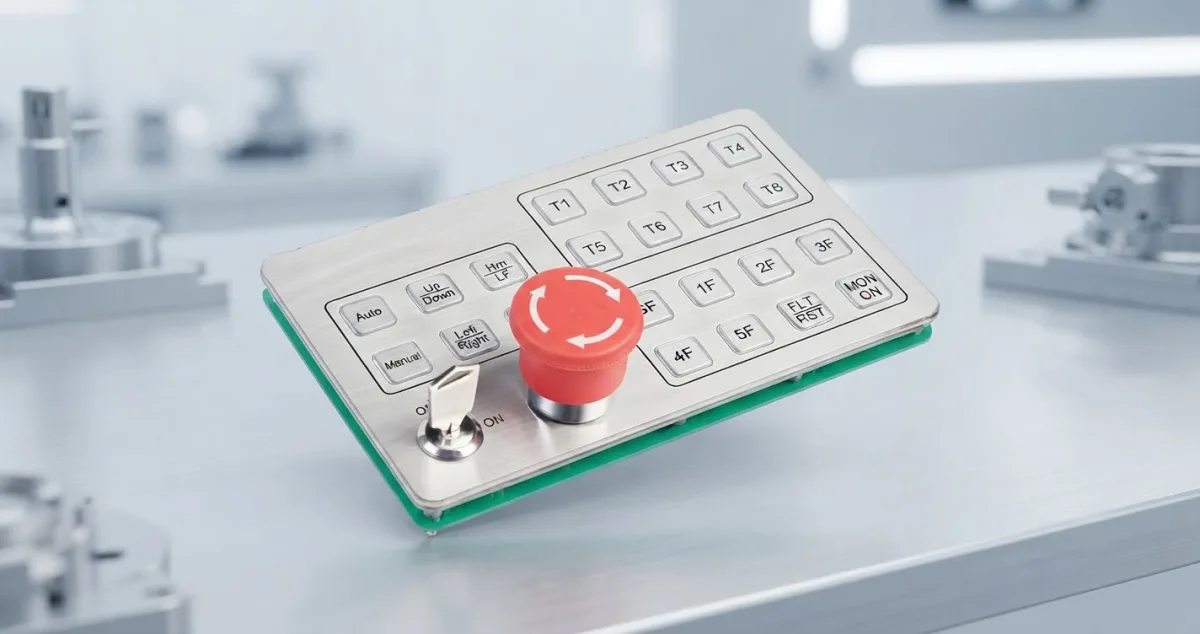
Keetronics ( India ) Pvt. Ltd. is India's leading manufacturer of custom designed input devices such as Membrane keyboards, Capacitive sensing keyboard (Capacitive Keyboard), Vandal resistant keyboards (metal keyboard)...
An Industrial Keypad or Keyboard is a heavy-duty input device specifically designed to operate reliably in harsh, extreme, or highly sterile environments. Unlike standard consumer keyboards—which can break down if exposed to dust, water, or rough handling—industrial interfaces are engineered to withstand conditions that would immediately ruin standard office hardware.
Key Features of Industrial Keyboards
-
Environmental Sealing: They feature high IP (Ingress Protection) ratings, such as IP65 or IP67, making them completely dustproof and waterproof. They can be washed down, submerged, or sprayed with water without failing.
-
Extreme Durability: Built to resist heavy impacts, vibration, and extreme temperature ranges (from freezing sub-zero environments to high-heat manufacturing floors).
-
Chemical and Fluid Resistance: They are often made from materials that resist corrosive chemicals, industrial oils, solvents, and strong medical disinfectants.
Common Types of Industrial Keyboards
Industrial keyboards are built differently depending on the specific environment they will be used in:
1. Membrane Keyboards / Keypads
These use a completely flat, sealed graphic overlay over flexible circuitry.
-
The Sensation: They can be tactile (using internal metal domes that "snap" when pressed to give the operator physical confirmation) or non-tactile (completely smooth surfaces requiring visual or audio feedback, like a beep on a screen).
-
Why they are used: Because they are completely flat, there are no crevices for dirt, bacteria, or moisture to hide. They are the absolute standard for cleanrooms, medical equipment, and food processing plants because they are incredibly easy to wipe down and sanitize.
2. Silicone Rubber Keyboards
Made from a molded, single-piece silicone rubber mat that covers the internal switch contacts.
-
The Sensation: They offer a soft, rubbery tactile response.
-
Why they are used: The one-piece molded structure acts as a perfect shield against dust, oils, and moisture. They are frequently used in military applications, outdoor kiosks, and industrial machinery control panels.
3. Vandal-Resistant Metal Keyboards
Constructed using heavy-duty stainless steel or aluminum housing and keycaps.
-
The Sensation: Hard, physical metal buttons with standard mechanical travel.
-
Why they are used: Designed specifically for public or unsupervised areas—like ATMs, self-service ticketing kiosks, and heavy manufacturing lines—where the device needs to survive physical abuse, scratching, or deliberate vandalism.
Where Are They Used?
-
Manufacturing & Automation: Control panels for CNC machines, factory assembly lines, and warehouse management.
-
Medical & Healthcare: Diagnostic equipment, operating rooms, and laboratories where everything must remain sterile.
-
Marine & Aerospace: Ship navigation bridges and aircraft ground support where salt water or intense vibration is present.
-
Public Kiosks: Outdoor ticketing machines, gas pumps, and parking meters exposed to rain and extreme weather.
Industrial keypads and keyboards are classified based on their structural design, material composition, and environmental resistance. Different industries require different types depending on factors like exposure to water, chemicals, physical impact, or the need for a completely sterile environment.
The primary types of industrial keyboards include:
1. Membrane Keyboards / Keypads
Membrane keyboards are constructed using multi-layered thin films. The top layer is a tough, printed plastic or polycarbonate sheet completely sealed over underlying circuitry.
-
How they feel: They can be tactile (utilizing stainless steel domes or polyester domes underneath the skin to create a noticeable "click" response) or non-tactile (a completely flat surface that responds to pressure, usually paired with a machine buzzer or light indicator).
-
Best used for: Medical devices, laboratories, and food processing plants. Because the top surface is flat and seamless, there are no crevices to harbor dirt or bacteria, making them exceptionally easy to wipe down and disinfect.
2. Silicone Rubber Keyboards
These feature a single-piece, molded silicone rubber mat that blankets the internal mechanical switch elements.
-
How they feel: They offer a soft, rubbery, flexible tactile sensation when pressed.
-
Best used for: Heavy machinery, outdoor terminals, and military environments. The continuous silicone shell acts as an impenetrable shield against dust, grime, heavy water spray, and industrial oils.
3. Vandal-Resistant Metal Keyboards
Constructed using high-grade stainless steel (often 304 or 316 grade) or ruggedized aluminum for both the outer casing and the physical keycaps.
-
How they feel: Solid, crisp, traditional mechanical key travel, but completely rigid under the finger.
-
Best used for: Unsupervised public areas, ATMs, self-service ticketing kiosks, and heavy mining or manufacturing lines. They are explicitly built to withstand severe physical impacts, hammer strikes, scratching, and deliberate vandalism.
4. Rigid Plastic / Mechanical Industrial Keyboards
These resemble traditional office keyboards but are upgraded with heavy-duty internal construction, high-impact ABS plastic, and completely sealed mechanical or membrane switches underneath.
-
How they feel: They provide the standard, familiar typing experience of a regular computer keyboard.
-
Best used for: Control rooms, CNC workstation desks, and marine vessels. They often include built-in industrial trackballs or touchpads to eliminate the need for an external mouse in tight workspace quarters.
Comparison Summary
| Type | Main Material | Key Benefit | Ideal Environment |
| Membrane | Polycarbonate / Polyester | Easy to sanitize, flat profile | Cleanrooms, Medical, Food Prep |
| Silicone Rubber | Molded Silicone | High oil, moisture & dust resistance | Warehouses, Military, Outdoor Kiosks |
| Metal / Vandal-Resistant | Stainless Steel / Aluminum | Unmatched impact and scratch resistance | ATMs, Public Kiosks, Mining |
| Rigid Plastic | High-Impact ABS | Familiar high-speed typing layout | CNC Stations, Factory Control Rooms |
Keetronics (India) Pvt. Ltd. is a prominent, ISO 9001:2015 certified manufacturer of industrial keypads, membrane keyboards, and user-interface solutions based in Pune, India. Founded in 1994, the company specializes in custom-engineering input devices designed to endure harsh, demanding environments across various sectors like medical, defense, and industrial automation.
Core Product Portfolio
Keetronics designs and manufactures several distinct types of industrial input technology:
1. Membrane Keyboards & Keypads
-
Tactile and Non-Tactile: As discussed earlier, they offer both tactile variants (using stainless steel domes for physical click feedback) and non-tactile variants (flat surfaces paired with external visual/audio cues).
-
Graphic Overlays: Built using high-quality polycarbonate or polyester sheets, making them completely sealed against dust and moisture.
2. Silicone Rubber Keypads
-
These feature a single-piece molded rubber construction that wraps around the circuitry, making them highly flexible, resilient to extreme temperatures, and comfortable to operate.
3. Capacitive & Resistive Touch Switches
-
Moving beyond traditional mechanical switches, they design touch-sensitive glass and plastic control panels that operate seamlessly through protective layers, widely used in modern medical equipment.
4. Vandal-Resistant & Metal Keyboards
-
For public-facing kiosks, automated teller machines (ATMs), or intense mining operations, they manufacture heavy-duty stainless steel and aluminum keypads built to survive severe impacts and scratching.
Industry Applications
Keetronics designs their input systems to satisfy stringent, industry-specific standards:
-
Medical Equipment: Flat-surface membrane designs that can handle regular cleanroom washdowns and harsh chemical sterilization.
-
Defense & Aerospace: Ruggedized, back-lit, and EMI/RFI-shielded keypads engineered to perform under intense vibration and extreme outdoor weather.
-
Industrial Automation: Heavy-duty machine control panels for CNC routers, assembly lines, and chemical processing facilities.
Need a custom HMI architecture for harsh operating conditions?
Talk to Our Team