
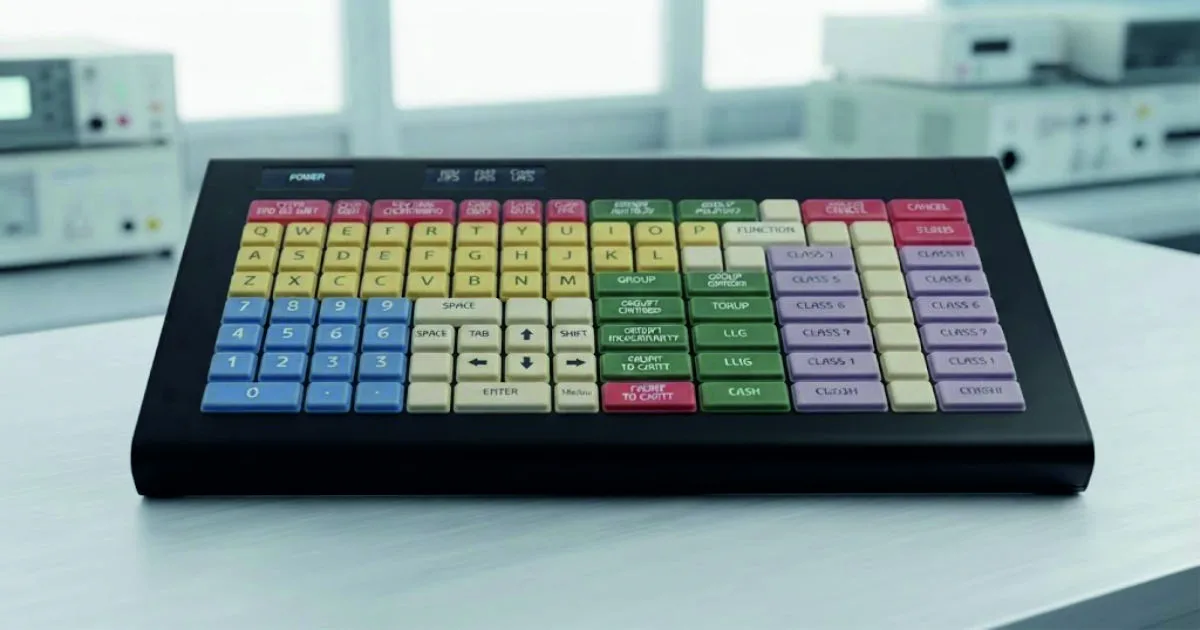
A long-travel keyboard (often referred to as a deep-travel keyboard) is a keyboard where the keys require a deeper physical press before they register a keystroke and bottom out.
A long-travel keyboard (often referred to as a deep-travel keyboard) is a keyboard where the keys require a deeper physical press before they register a keystroke and bottom out.
Instead of the shallow, flat feel you get on modern laptops, these keyboards offer a more substantial, rhythmic typing experience.
Key Characteristics
-
Distance: The keys typically travel 3.5 mm to 4.0 mm from their resting position to the absolute bottom of the press.
-
Tactile Feedback: Because the keys move further, they provide a much more pronounced, distinct physical feel (and often a satisfying "clack" or "click") when a stroke registers.
-
Cushioning: The extended travel distance helps absorb the impact of heavy typing, which many users find reduces finger fatigue and prevents "bottoming out" too harshly.
Long Travel vs. Short Travel
| Feature | Long Travel Keyboard | Short Travel Keyboard |
| Average Key Travel | 3.5 mm to 4.0 mm | 1.0 mm to 2.5 mm |
| Commonly Found On | Desktop mechanical keyboards, gaming rigs, industrial PCs | Slim laptops (like MacBooks), low-profile wireless keyboards |
| Typing Feel | Deep, tactile, and rhythmic | Quick, snappy, and quiet |
| Physical Profile | Bulky, thick chassis | Sleek, flat, and highly portable |
Who Prefer Them?
-
Writers & Typists: People who type for hours a day often prefer the comfort, accuracy, and clear physical confirmation of each keystroke.
-
Gamers: Mechanical switches with distinct travel allow for incredibly precise inputs and faster, intentional resets.
-
Industrial Workers: Heavy-duty, ruggedized versions are used in factories or fields because the deep travel allows workers to easily feel the keypresses even while wearing thick safety gloves.
Need a custom HMI architecture for harsh operating conditions?
Talk to Our Team