
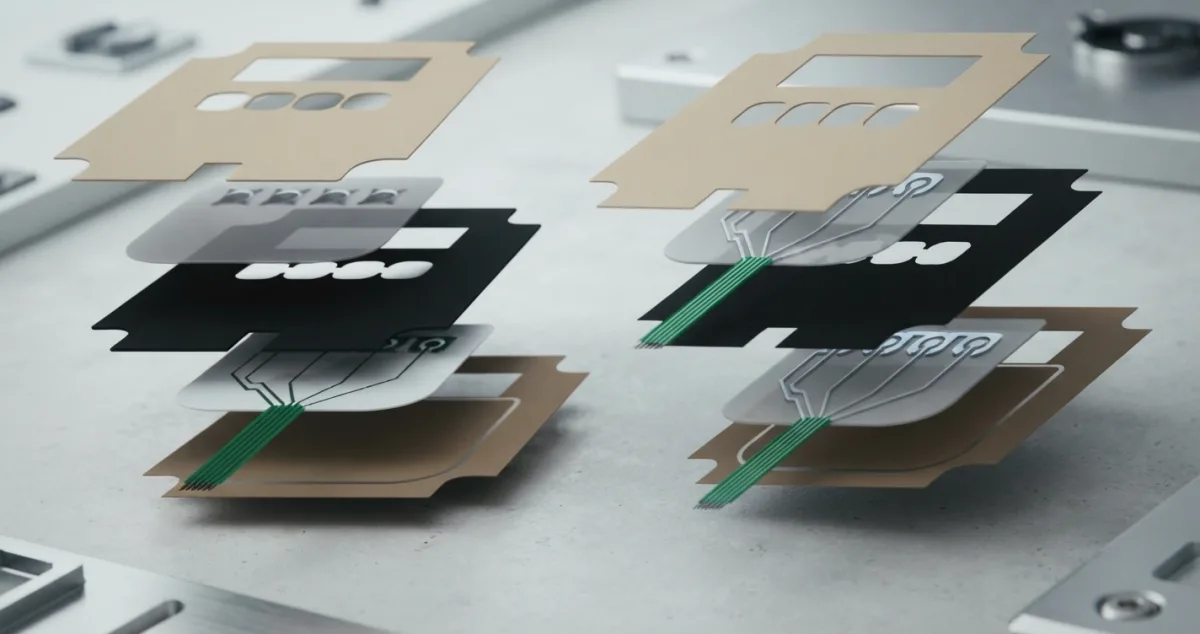
Tactile keyboards provide physical feedback—a small bump or click—when a key is pressed. This confirms activation without bottoming out the key. Non-tactile (linear) keyboards travel smoothly from top to bottom without....
Tactile Keyboards
Tactile keyboards feature a noticeable physical "bump" right at the actuation point (the exact moment the computer registers your keystroke).
-
The Feel: You feel a distinct point of resistance halfway through pressing the key, letting you know the press registered without needing to force the key all the way down.
-
Sound: They can range from relatively quiet (just the feel of the bump, like Cherry MX Brown switches) to intentionally loud and "clicky" (Cherry MX Blue switches).
-
Best For: Typing, coding, and general office work. Touch-typists love them because the physical feedback helps reduce typos and finger fatigue over long sessions.
Non-Tactile (Linear) Keyboards
Non-tactile keyboards offer a smooth, uninterrupted travel from the very top of the keypress all the way to the bottom.
-
The Feel: There is no bump or click in the middle. The resistance is completely consistent throughout the entire press.
-
Sound: Generally much quieter than tactile keyboards, making them a staple for shared spaces.
-
Best For: Fast-paced gaming. Because there is no reset bump to overcome, it is much easier to rapidly double-tap keys. They are also ideal for quiet office environments or streaming setups where you don't want mic bleed.
Comparison At A Glance
| Feature | Tactile Keyboards | Non-Tactile (Linear) Keyboards |
| Keypress Feel | Noticeable bump halfway down | Smooth and consistent all the way |
| Primary Benefit | Excellent typing accuracy & physical feedback | Speed, seamless rapid taps, and quietness |
| Common Examples | Cherry MX Brown, Gateron Baby Kangaroo | Cherry MX Red/Black, standard laptop scissor keys |
| Ideal Audience | Writers, programmers, casual gamers | Competitive gamers, office workers |
Keetronics ( India ) Pvt. Ltd. is a former Tactile and Non-Tactile Keyboards manufacturers and suppliers in India. In today’s growing technological world, there is a large adoption of machines and their components. To complete every demand and increase performance, we are offering our new technological tactile and non-tactile keyboards.
Both types of keyboards have multiple features that have been installed inside and made with strong-quality materials for performing also in outer conditions. Due to its all aspects, it can be used in multiple applications, such as household, consumer electronics and industrial uses.
What are Tactile and Non-Tactile Membrane Keyboards?
The tactile membrane keyboards are made with metal domes, actuators and polysomes for operating with physical touch and giving response to the computers or connected devices. And non-tactile keyboards, also known as linear membrane keyboards, do not have any physical domes attached and can function smoothly without any bumps or clicks.
Best Uses for Tactile Keyboards
Tactile keyboards excel in environments where accuracy, rhythm, and clear physical confirmation of a keypress are important.
-
Heavy Typing and Coding: Programmers, writers, and data entry professionals heavily favor tactile switches (like Cherry MX Browns). The physical "bump" at the actuation point lets you know the key registered without needing to force it all the way down, drastically improving typing speed and reducing typos.
-
Reducing Finger Fatigue: Because you don't have to "bottom out" (press the key completely to the plastic base), typing requires less force over long eight-hour workdays.
-
Casual Gaming: They work perfectly fine for regular gaming, especially in strategy, RPG, or simulation games where precise, deliberate keypresses matter more than raw speed.
Best Uses for Non-Tactile (Linear) Keyboards
Non-tactile keyboards offer a completely smooth, frictionless travel from top to bottom, making them the go-to choice for speed and stealth.
-
Fast-Paced & Competitive Gaming: If you play first-person shooters (FPS), MOBAs, or battle royales, linear keyboards (like Cherry MX Reds) are the gold standard. Because there is no bump to overcome, you can double-tap and spam keys seamlessly with minimal latency.
-
Quiet Offices and Shared Spaces: Non-tactile switches are inherently quieter because they lack the internal clicking mechanisms found in tactile or clicky keyboards. If you work in an open office or live with roommates, a linear keyboard keeps the noise to a minimum.
-
Streaming and Content Creation: If you record audio, stream on Twitch, or participate in constant Zoom calls, non-tactile keyboards prevent loud clacking noises from bleeding into your microphone.
Summary Checklist: Which should you use?
| Choose a Tactile Keyboard if: | Choose a Non-Tactile Keyboard if: |
| Your primary task is typing, writing, or coding. | Your primary focus is competitive gaming. |
| You want to minimize typing errors. | You need to rapidly double-tap keys. |
| You enjoy a physical, crisp sensation under your fingers. | You prefer a smooth, fluid keystroke. |
| Noise isn't an issue in your environment. | You need to keep things quiet for mics or roommates. |
Keetronics specializes in industrial interface solutions, manufacturing custom tactile and non-tactile membrane keyboards and keypads designed for harsh environments, medical equipment, and control panels.
Need a custom HMI architecture for harsh operating conditions?
Talk to Our Team