
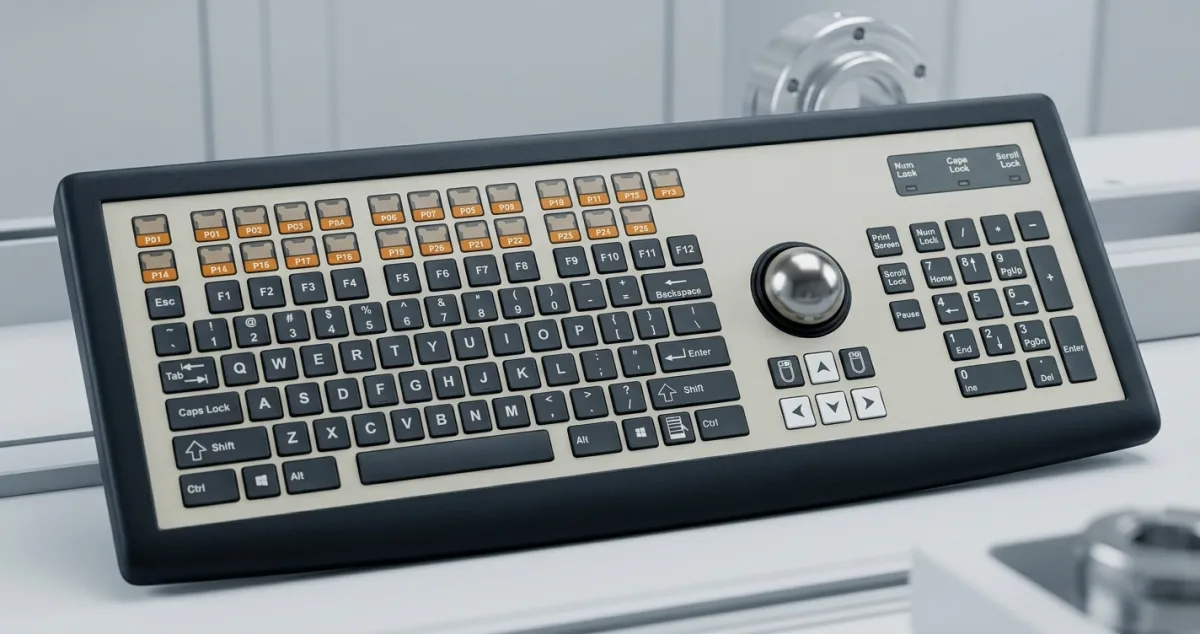
A tactile membrane keyboard uses a pressure-sensitive, multi-layered flat panel or rubber dome switch mechanism. Unlike standard non-tactile membranes (like a microwave pad), tactile variants include built-in metal or p...
A tactile membrane keyboard (or tactile membrane switch) is a hybrid input device that combines the slim, sealed design of a traditional membrane keyboard with the physical, "clicky" feedback usually associated with mechanical switches.
While standard membrane keyboards often feel mushy because you are pressing down on a soft silicone dome, tactile versions incorporate a physical mechanism to give you a distinct sensation when a keypress is registered.
How It Works
Traditional membrane keyboards rely on two conductive traces being pushed together by a rubber dome. A tactile membrane keyboard enhances this experience using one of two primary methods:
-
Metal Domes: Small, stainless steel or gold-plated domes are placed beneath the graphic overlay. When you press the key, the metal dome snaps downward, creating a crisp, mechanical "snap" or tactile bump.
-
Thermoformed Plastic Domes: The top polyester layer of the membrane itself is heat-formed into a dome shape. When pressed, the plastic flexes and snaps back, providing a milder tactile response than metal.
Key Benefits
-
Physical Feedback: Users get clear confirmation that a key has been successfully pressed, reducing typing errors and the need to double-check a screen.
-
Environmental Sealing: Because the outer layer is a solid, continuous sheet (usually polyester or polycarbonate), these keyboards are completely sealed against dust, dirt, moisture, and chemical spills.
-
Slim Profile: They offer tactile feedback without the bulk, weight, or high travel distance of full mechanical switches.
-
Durability: High-quality metal domes can withstand millions of actuations, making them highly reliable.
Where Are They Used?
Because of their durability and sealed nature, you rarely see full-sized tactile membrane keyboards on consumer desktop PCs. Instead, you will find them heavily utilized in:
-
Medical Equipment: Where interfaces must be wiped down and sanitized regularly.
-
Industrial Control Panels: Where dust, oil, and harsh environments would ruin a standard keyboard.
-
Household Appliances: Micro ovens, washing machines, and smart home panels.
-
Aerospace & Defense: For ruggedized, lightweight control interfaces.
Tactile Membrane vs. Standard Membrane vs. Mechanical
| Feature | Standard Membrane | Tactile Membrane | Mechanical |
| Feedback | Soft, mushy, quiet | Sharp, distinct "snap" bump | Highly tactile, audible click/clack |
| Sealing | Varies (often vulnerable to spills) | Fully sealed against dust & liquids | Completely open to dust & liquids |
| Profile | Flat / Low profile | Very flat / Flat | Tall / High profile |
| Primary Use | Budget office keyboards | Industrial, medical, appliances | Gaming, heavy typing, programming |
Tactile membrane keyboards (often referred to as tactile membrane switches) are widely used across industries where a standard office keyboard or a mechanical keyboard simply wouldn't survive. They strike a balance between a completely flat, sealed interface and the physical "snap" feedback users need to confirm a keypress.
1. Medical and Healthcare Equipment
In hospitals and laboratories, equipment must be rigorously sanitized to prevent the spread of pathogens. Because tactile membrane keyboards feature a completely sealed, continuous top overlay, they are highly utilized in:
-
Patient monitors and diagnostic imaging systems.
-
Infusion pumps and lab analyzers.
-
Hospital bed controls.
Why it works here: These interfaces can be aggressively wiped down with harsh chemical disinfectants, alcohol, and bleach without any liquid seeping into the internal electronics.
2. Industrial Automation and Manufacturing
Factory floors are notoriously hostile environments filled with dust, oil, grease, and vibrating machinery. Tactile membrane keypads are heavily relied upon for:
-
CNC machinery and robotic control panels.
-
Digital weighing scales and material handling systems.
-
Environmental control systems.
-
Manufacturers like Keetronics (India ) Pvt. Ltd. specialize in producing these ruggedized, dust-proof interfaces specifically to withstand millions of operations in tough industrial settings.
3. Commercial Food Service and Appliances
From commercial kitchens to your own countertop, these keyboards handle grease, steam, and food spills seamlessly. Common uses include:
-
Microwave ovens, dishwashers, and washing machines.
-
Commercial blenders and deep fryers.
-
Vending machines and point-of-sale (POS) terminals.
Why it works here: If a ingredients spill on the keypad, it can simply be wiped clean with a damp cloth. The integrated metal or plastic domes ensure the operator can feel the button press even if they are wearing thick gloves.
4. Aerospace, Defense, and Marine
In military and marine applications, equipment is exposed to extreme weather, salt water, and intense vibrations. They are used in:
-
Ruggedized handheld communication devices.
-
Boat navigation and sonar systems.
-
Cockpit and cabin control panels.
-
Why it works here: They offer a lightweight, space-saving design that operates reliably across massive temperature swings and prevents water ingress.
Why Choose Tactile Membrane Over Other Designs?
While standard membrane keyboards (like cheap desktop keyboards) often feel "mushy" and lack clear actuation points, tactile membrane switches utilize metal domes or thermoformed plastic to create a distinct, physical snap.
Compared to mechanical switches, they offer unique advantages for specific use cases:
| The Advantage | What It Means for the User |
| Complete Environmental Sealing | Prevents water, dust, oils, and chemicals from ruining the circuitry. |
| Ultra-Low Profile | Keeps control panels incredibly thin, lightweight, and compact. |
| High Durability | Built to survive anywhere from 1 to 5 million presses depending on whether they use stainless steel or polyester domes. |
| Design Flexibility | Allows manufacturers to easily integrate backlighting (like SMD LEDs) and custom graphic branding right into the top layer. |
Need a custom HMI architecture for harsh operating conditions?
Talk to Our Team