
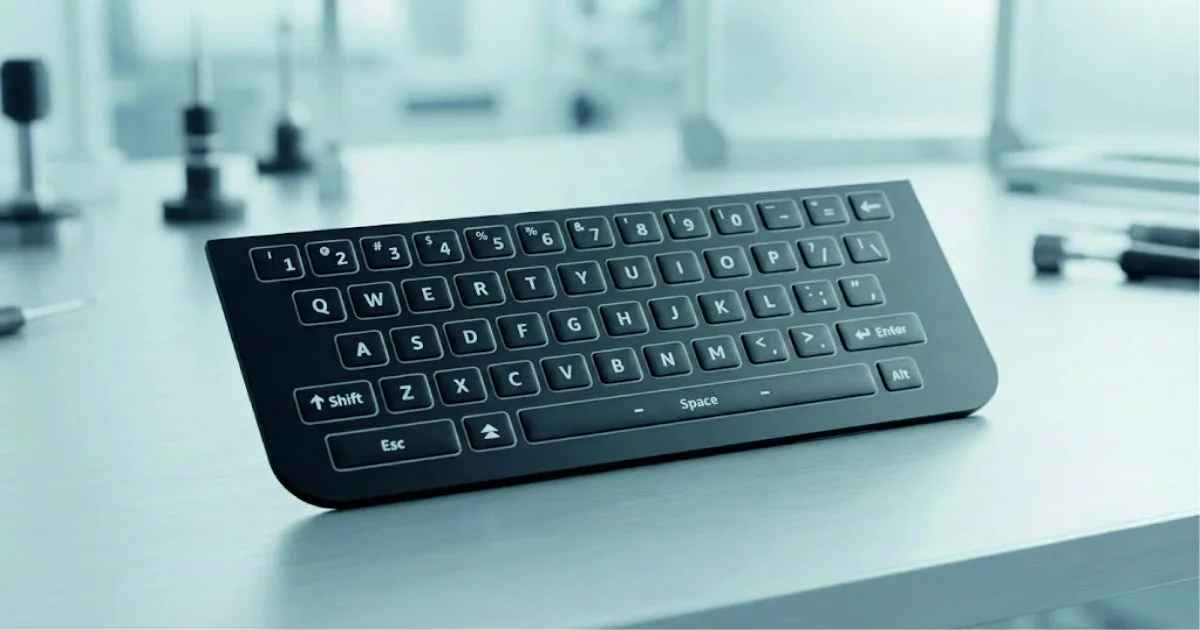
A 3D/Epoxy Foam Keyboard refers to a specialized type of membrane or capacitive keypad utilizing a unique manufacturing method where the keys are molded from resilient epoxy foam. It is designed to provide ultra-thin, c...
Keetronics ( India ) Pvt. Ltd. Manufactured using advanced Printed Electronics (PE) techniques, these keyboards provide unique, soft-touch tactile feedback and are widely used in medical devices, industrial control panels, and smart appliances.
Key Characteristics & Benefits
- 3D Surface Design: Allows for keys to be created in concave, convex, or flat shapes depending on ergonomic or aesthetic preferences.
- Tactile Feedback: The epoxy foam offers a satisfying, cushioned "snap" or tactile response when pressed.
- Cost & Environmental Efficiency: By eliminating the need for expensive injection-molding tooling, the production process becomes more affordable and eco-friendly. The foam is typically halogen-free, VOC-free, and RoHS compliant.
- Durability: The material is highly resistant to mechanical wear, compression deformation, and moisture, making it ideal for industrial or high-use control panels.
Common Use Cases
Because of their thin profile and environmental resistance, 3D/epoxy foam keyboards are rarely used as standard computer desktop keyboards.
- Industrial control panels
- Medical equipment interfaces
- Automotive and marine dashboards
- Specialized electronics that require thin form-factors and tactile touch controls
ey Features
- Contoured Design: Allows for unique convex or concave key shapes that are highly ergonomic and offer distinct tactile feedback.
- No Injection Molding: Instead of traditional rigid plastic molds, the 3D keys are built using a specialized flexible epoxy foam layer.
- Seamless & Sealed: Often designed as a single continuous surface, making them highly resistant to dust, moisture, and chemical spills.
- Eco-friendly: The manufacturing process is highly efficient and eliminates the need for tooling, significantly reducing production costs and environmental impact.
Common Applications
Because they combine the durability of a membrane keyboard with the tactile feel of physical keys, you will usually find them in:
- Medical Equipment: Where sterile, wipeable surfaces are required.
- Industrial HMI (Human Machine Interfaces): Machinery panels where operators need to feel the buttons while wearing gloves.
- Specialty Consumer Electronics: Devices requiring thin, lightweight, and modern aesthetic designs.
If you are looking for more specific hardware, this technology is quite distinct from mechanical keyboard foam (which enthusiasts use to dampen sound).
Need a custom HMI architecture for harsh operating conditions?
Talk to Our Team