
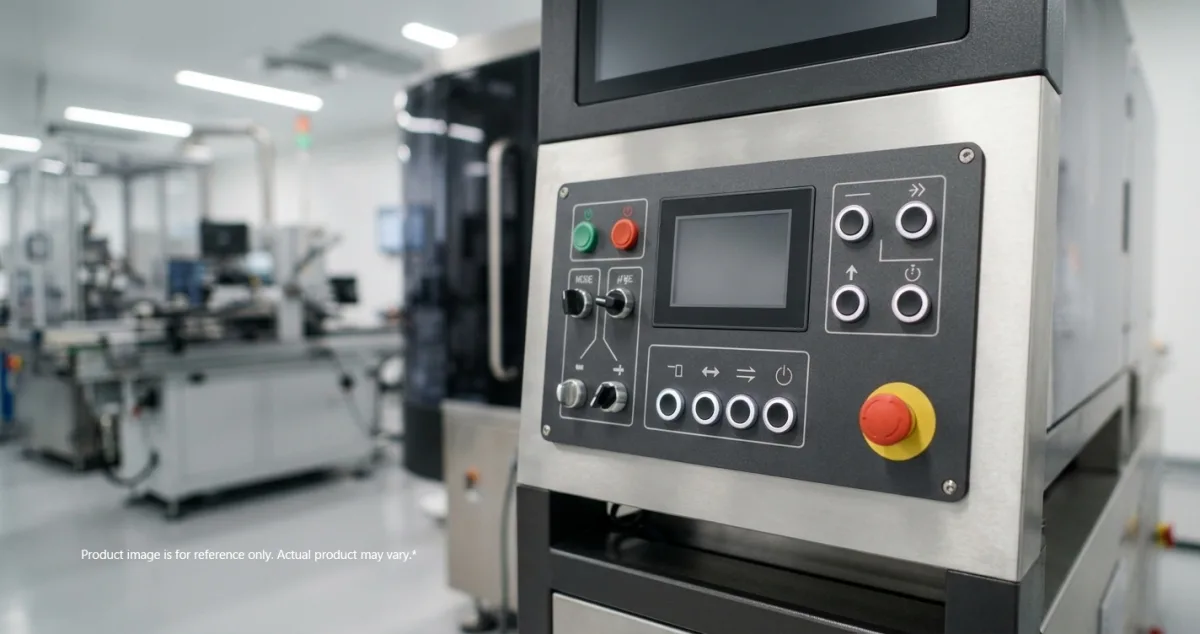
A custom machine interface overlay is a durable printed film or panel (like polycarbonate, polyester, or aluminum) applied over control equipment. It acts as a protective shield while providing icons, keypads, and windo...
A custom machine interface overlay (often referred to as a graphic overlay or Human-Machine Interface (HMI) overlay) is a durable, printed protective layer applied to the front surface of electronic control equipment. It serves as both a protective shield and the visual, tactile interface that allows operators to interact with a machine safely and efficiently.
Key Functions of an Overlay
-
Operator Guidance & Usability: It features custom printed icons, colors, labels, and logos that guide users on how to operate the machinery.
-
Tactile Feedback: Many overlays feature embossed keys or domes, giving operators physical confirmation (a "click" sensation) when a button is pressed.
-
Environmental Protection: It seals the sensitive underlying electronics against dust, moisture, harsh industrial chemicals, and UV exposure.
-
Display Integration: Overlays often incorporate transparent or tinted "windows" that align with underlying LED or LCD screens.
-
Dead-Front Graphics: It can feature hidden icons or text that only become visible when backlit from behind.
Common Materials Used
-
Polyester (PET): Extremely durable and flexible. It has excellent chemical resistance and is ideal for systems requiring millions of button presses.
-
Polycarbonate (Lexan): Highly clear and impact-resistant, making it perfect for display windows, though slightly less resistant to harsh chemicals than polyester.
-
Aluminum/Metal: Used for heavy-duty, ultra-rugged industrial settings where severe abrasion or extreme temperatures are expected.
The manufacturing process of a custom machine interface overlay (also known as a graphic overlay) is highly precise. Because these overlays serve as the literal interface between humans and machines—often in harsh industrial, medical, or outdoor environments—each step of the making process is engineered for durability, exact alignment, and functionality.
Here is the step-by-step breakdown of how they are made:
1. Design & Engineering (The Blueprint)
Before any physical manufacturing begins, engineers create exact digital layouts using vector-based software (like Adobe Illustrator or CAD programs).
-
Key Decisions: During this phase, engineers plan the exact dimensions, cut-outs for physical buttons, and transparent windows for LCD/LED displays.
-
Color Registration: Exact color matching is planned using systems like Pantone (PMS) to ensure brand consistency and high-visibility safety colors.
2. Material Selection
Depending on where the machine will be used, the appropriate base material film is chosen:
-
Polyester (PET): Selected for applications requiring extreme flex life (such as tactile button domes) and high chemical resistance.
-
Polycarbonate (Lexan): Chosen for its optical clarity, ease of processing, and high impact resistance, making it great for displays and lenses.
3. Subsurface Printing
To prevent the graphics from scratching, fading, or wearing off over time, manufacturers use subsurface printing (also called reverse printing).
-
The Technique: The inks are printed on the underside (back) of the clear film. This means the durable plastic sheet acts as a permanent shield, protecting the ink from fingernails, cleaning chemicals, and heavy wear.
-
Methods: High-volume projects typically use traditional screen printing for rich, vibrant, opaque colors. Digital printing is used for rapid prototyping, complex gradients, or low-volume custom runs.
4. Feature Integration (Embossing & Windows)
Once printed, the overlay undergoes specialized forming steps to add interactive features:
-
Embossing: Heat and pressure are applied to create raised areas (such as pillow or rim embossing) over the button locations. This gives the operator physical "tactile feedback" so they can feel where to press without looking.
-
Display Windows: Clear areas for screens can be left completely transparent, or printed with a tinted transparent ink (like red or green) to make underlying LED displays easier to read.
-
Selective Texturing: Specialized selective textures can be applied to the top surface—making certain areas glossy for screens while keeping the rest of the interface matte to reduce glare and fingerprint smudges.
5. Adhesive Application
A high-performance adhesive backing (typically from industry-standard lines like 3M) is applied to the rear of the overlay.
-
Selective Adhesion: Adhesives must be "selectively die-cut" so that there is no adhesive directly under display windows or movable button domes. This ensures buttons don't stick down when pressed, and screen windows remain perfectly clean.
6. Precision Die-Cutting
The final physical shaping of the overlay is completed using one of two methods:
-
Steel Rule or CNC Die-Cutting: Perfect for high-volume production to stamp out the exact outer dimensions and internal holes.
-
Laser Cutting: Often used for prototypes or complex, intricate designs where extreme precision is required without the tooling costs of physical dies.
7. Inspection & Assembly
In the final step, the overlays undergo strict quality control to check for color accuracy, registration alignment, and functional testing of any embossed keys. They are then ready to be peeled and adhered directly onto the machine's control panel, metal plate, or integrated membrane switch.
Keetronics (India) Pvt. Ltd. is a pioneering Indian manufacturing company specializing in advanced electronics, custom Human-Machine Interface (HMI) solutions, and input devices. Established in 1994, the company has over 32 years of industry experience and has completed more than 7,000 projects globally.
Keetronics designs, develops, and manufactures high-quality custom interfaces and automation hardware, including:
- Industrial Input Devices: PCB & PCF membrane switches, rugged customized computer keyboards, and metallic industrial keyboards.
- HMI & Displays: Customized rugged industrial touch displays and HMI solutions tailored for harsh environments.
- Smart Automation: Smart touch switches for homes, offices, and hotels, alongside custom embedded solutions.
- Specialized Industries: High-reliability input devices engineered specifically for defense, military, aerospace, medical, and marine applications.
Keetronics designs, develops, and manufactures high-quality Custom machine interface overlay.
Need a custom HMI architecture for harsh operating conditions?
Talk to Our Team