
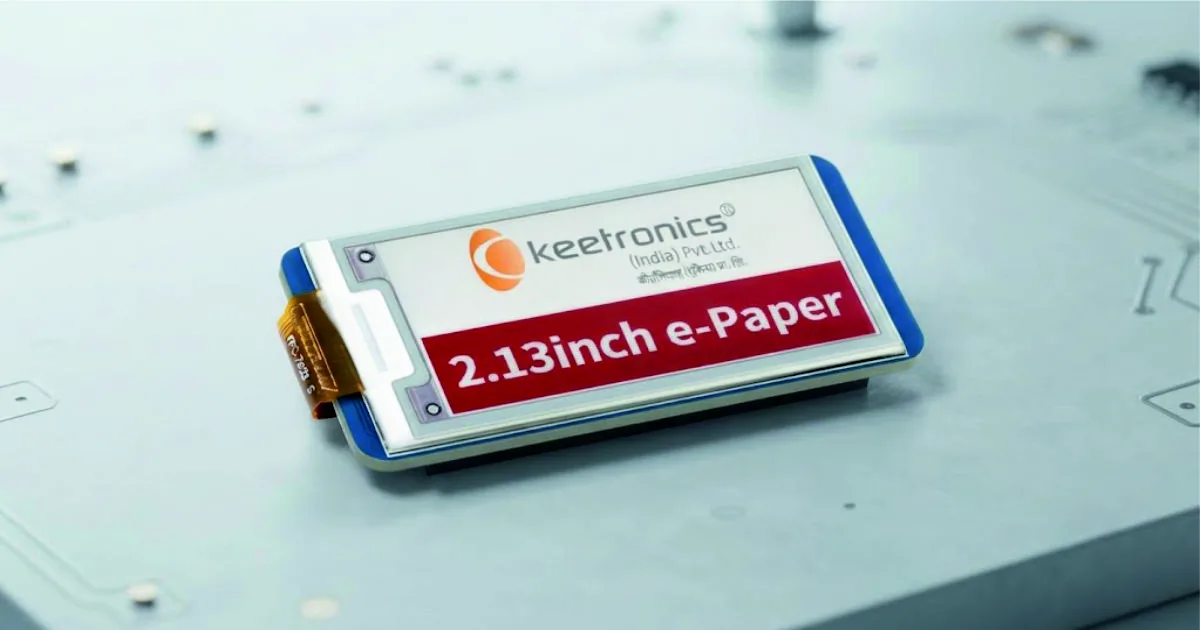
Electronic Paper (e-Paper), also known as electronic ink or e-Ink, is a display technology designed to mimic the appearance of ordinary ink on paper.
Unlike traditional liquid crystal displays (LCD) or OLED screens—which emit light from behind the panel—e-Paper displays reflect ambient light, just like real paper. This makes them incredibly comfortable to read in direct sunlight and significantly reduces eye strain.
How e-Paper Works
Most e-Paper displays rely on a technology called electrophoresis. Inside the display are millions of tiny microcapsules, roughly the diameter of a human hair.
-
The Microcapsules: Each capsule contains negatively charged black particles and positively charged white particles suspended in a clear fluid.
-
The Electric Charge: By applying a positive or negative electric field to specific areas of the screen, the charged particles move to the top of the microcapsule.
-
Image Retention: When the white particles rise to the surface, the pixel looks white; when the black particles rise, the pixel looks black.
Key Advantages of e-Paper
1. Ultra-Low Power Consumption (Bistable)
e-Paper is bistable, meaning it only consumes power when the image changes (e.g., when you turn a page on an e-reader). Once the particles are moved into place, they stay there without needing any electricity. You could unplug the battery, and the image would remain on the screen indefinitely.
2. High Daylight Readability
Because these screens reflect light rather than emit it, the brighter the ambient light (like direct sunlight), the clearer and sharper the display looks. Traditional screens usually become washed out and unreadable in bright conditions.
3. Less Eye Strain
Since e-Paper doesn’t rely on a constant backlight blasting light directly into your eyes, reading on an e-Paper display is much closer to reading a physical book, making it ideal for long reading sessions.
Common Applications
Because of its unique properties, e-Paper is widely used across various industries:
-
E-Readers: Devices like the Amazon Kindle or Kobo are the most famous examples.
-
Electronic Shelf Labels (ESLs): Retail stores use small e-Paper tags to dynamically update prices across shelves without needing to constantly change batteries.
-
Digital Signage: Used for bus stop timetables or outdoor notices where running power lines is difficult.
-
Wearables & Smart Tech: Some smartwatches, secondary smartphone displays, and low-power writing tablets use e-Paper to extend battery life to weeks instead of days.
Need a custom HMI architecture for harsh operating conditions?
Talk to Our Team