
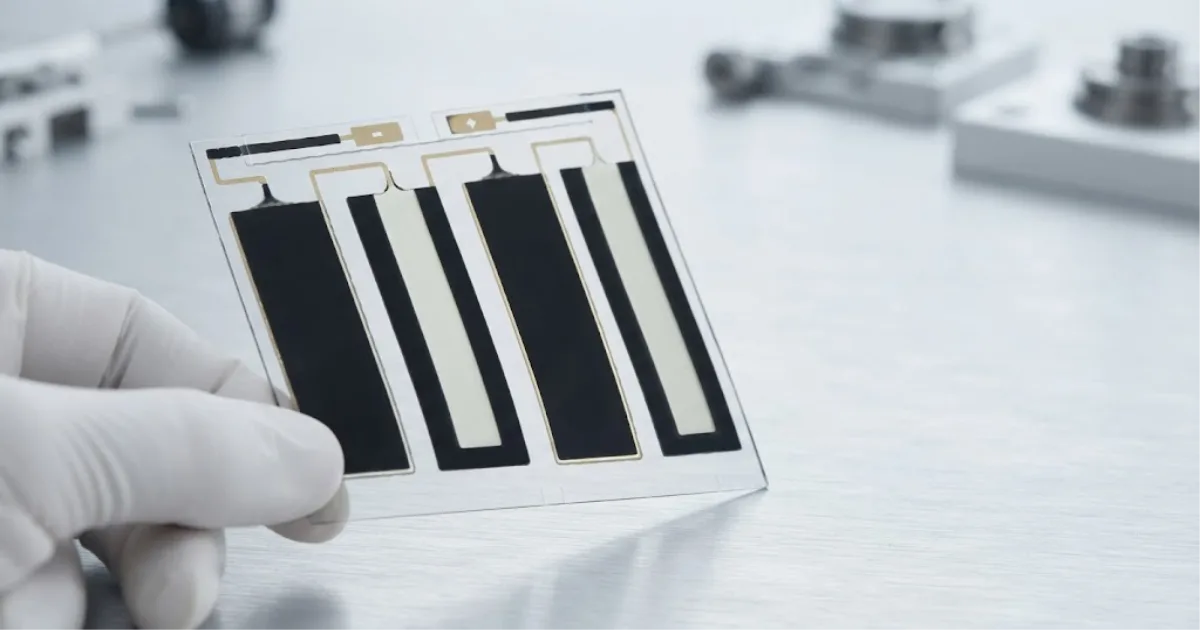
Functional printed electronics is an additive manufacturing process where conductive, resistive, and semiconducting inks are deposited onto flexible or unconventional substrates (like plastics, paper, or textiles) using...
Functional Printed Electronics (FPE) represents a massive shift in how we manufacture electronics. Instead of the traditional method—which involves etching away sheets of copper on rigid fiberglass boards (PCBs)—printed electronics uses precision printing presses to deposit functional inks directly onto flexible substrates like plastics, paper, textiles, or glass.
The result is electronic components that are thin, lightweight, stretchable, and incredibly cost-effective to produce at massive scale.
Core Building Blocks of Printed Electronics
To print a working circuit, you need three fundamental components:
1. Functional Inks
Instead of traditional colored graphics ink, these materials have active electrical properties:
-
Conductive Inks: Made with silver, copper, graphene, or carbon nanoparticles to create wiring, antennas, and electrodes.
-
Semiconductive Inks: Organic polymers or metal oxides used to print active elements like transistors and diodes.
-
Dielectric/Insulating Inks: Used to create isolating layers between crossing circuits or to act as the dielectric layer in capacitors.
2. Substrates (The Base Material)
Because the process doesn't require extreme heat like silicon manufacturing, electronics can be printed onto highly flexible surfaces:
-
Polymers: PET, PEN, and Polyimide (Kapton) are the industry standards for their thermal stability.
-
Paper & Cardboard: Used for ultra-low-cost, disposable smart packaging and eco-friendly sensors.
-
Textiles: Conductive inks printed directly onto fabrics to create smart clothing and wearable biometric monitors.
3. Printing Methods
Manufacturers adapt traditional graphic printing techniques for electronic precision:
-
Screen Printing: Best for thick layers; widely used for printing electrodes, heating elements, and biosensors (like glucose test strips).
-
Inkjet Printing: A digital, contactless method ideal for rapid prototyping, customized electronics, and thin-film transistors.
-
Roll-to-Roll (R2R) Gravure / Flexography: Highly automated, high-speed methods that can churn out miles of continuous circuitry, drastically lowering production costs.
Key Applications Driving the Industry
FPE isn't trying to replace high-performance silicon computer chips; instead, it enables electronics in places where silicon is too rigid, bulky, or expensive.
-
Smart Packaging & Logistics: Printing thin RFID or NFC tags directly onto shipping labels or consumer goods for real-time tracking, anti-counterfeiting, and temperature monitoring.
-
Medical & Wearable Sensors: Flexible, skin-conformable patches that monitor heart rate, hydration, or sweat biomarkers without irritating the patient.
-
Automotive Interiors: Fusing printed touch controls, seat occupancy sensors, and heating elements directly into curved plastic dashboards or fabric seats.
-
Flexible Displays & Lighting: OLED displays and large-area electroluminescent lighting sheets that can bend, roll, or fold.
-
Sustainable Energy: Printed perovskite solar cells that are lightweight enough to be applied to windows or uneven roofing surfaces.
Why the Shift? (Advantages vs. Challenges)
| Advantages | Challenges |
| Flexibility & Form Factor: Can be bent, rolled, twisted, and seamlessly integrated into 3D shapes. | Lower Performance: Printed transistors are significantly slower than traditional crystalline silicon chips. |
| Eco-Friendly Manufacturing: Additive manufacturing (only depositing material where needed) vastly reduces chemical waste compared to traditional subtractive etching. | Resolution Limits: Printing presses struggle to print lines down to the nanometer scale achieved by silicon photolithography. |
| Massive Cost Reduction: High-speed roll-to-roll printing allows for ultra-high-volume production at a fraction of traditional costs. | Material Degredation: Some organic inks are sensitive to moisture and oxygen, requiring advanced encapsulation layers. |
Functional Printed Electronics (FPE) is used to embed electronics into thin, flexible, lightweight, and low-cost formats where traditional rigid silicon chips won't fit.
Instead of replacing standard computers, printed electronics opens up entirely new categories of smart, interactive products across several key industries.
1. Consumer Electronics & Interactive Displays
This is the largest market application for printed electronics, driving massive innovation in flexible devices.
-
Foldable & Curved Screens: Organic LEDs (OLEDs) and quantum-dot panels utilize printed layers for light emission and control circuitry, making bendable smartphones and curved vehicle displays possible.
-
Membrane Switches & Capacitive Touch: Ultra-thin, printed silver or carbon inks are layered beneath plastic panels to create the sleek touch control panels seen on modern microwaves, smart coffee makers, and home automation hubs.
2. Retail, Logistics, & "Smart Packaging"
FPE allows logistics networks to track goods at a incredibly granular, fraction-of-a-cent scale.
-
Printed RFID & NFC Tags: Antennas are printed with conductive inks directly onto paper shipping labels or retail hangtags, allowing high-speed inventory tracking without line-of-sight scanning.
-
Freshness & Smart Condition Labels: Specialized active inks can change properties based on time or temperature, allowing food or pharmaceutical packaging to visually or digitally alert handlers if a product has spoiled or overheated.
3. Medical Devices & Healthcare
Because printed electronics can be deposited on flexible, breathable polymers, it is transforming patient care.
-
Wearable Biosensors & Smart Patches: Skin-conformable patches monitor real-time vital signs like heart rate, body temperature, or hydration levels, transferring data wirelessly via a printed antenna.
-
Disposable Diagnostic Strips: Mass-produced glucose test strips for diabetics utilize printed carbon or silver electrochemical electrodes to measure blood sugar accurately and affordably.
4. Automotive & Transportation
Automotive interiors are shifting away from heavy wire harnesses toward integrated, aerodynamic electronics.
-
In-Mold Electronics (IME): Circuit patterns and touch buttons are printed directly onto flat plastic, which is then thermoformed into 3D curved shapes, creating seamless, wire-free car dashboards and center consoles.
-
Printed Smart Seats: Flexible occupancy sensors, weight detectors, and carbon-based heating elements are printed directly onto fabrics or layered right beneath leather seating.
5. Smart Textiles & Wearable Tech
Moving past rigid plastic, conductive inks can bond to elastic textiles to make clothes "smart."
-
Biometric Clothing: Heated athletic gear or military uniforms with printed thermal circuits or embedded ECG wiring knit right into the fabric fabric layers.
-
Structural Monitoring: Flex and stretch sensors printed on straps or bands to analyze the form of athletes or physical therapy patients.
6. Energy Harvesting & Lighting
-
Flexible Photovoltaics (Solar Panels): Perovskite and organic solar cells are printed via high-speed roll-to-roll printing presses. These ultra-thin solar sheets can be applied to uneven surfaces, window glass, or wearable gear.
-
Large-Area Electroluminescent Lighting: Thin sheets of printed lighting used for emergency exit strips, safety gear, or backlighting architectural designs.
Need a custom HMI architecture for harsh operating conditions?
Talk to Our Team