
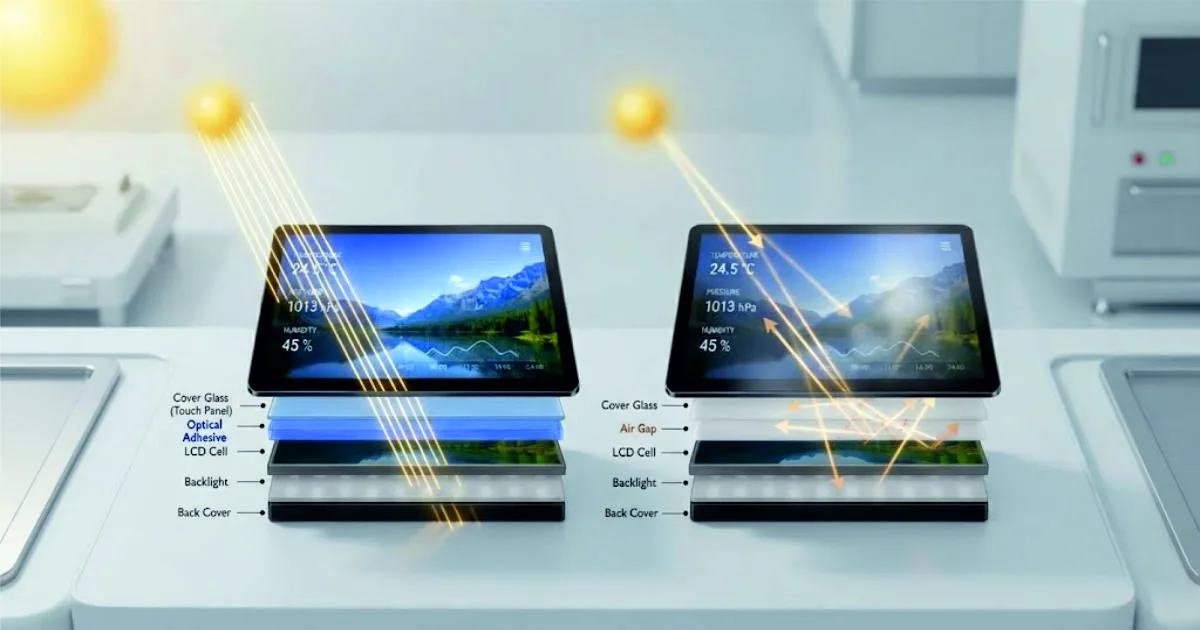
Optical bonding is the process of applying a transparent, highly durable adhesive to fill the air gap between a display screen and its cover glass. This simple process eliminates internal light reflections, providing cr...
While we touched on these briefly at the very beginning, a deep dive into the benefits of optical bonding reveals why it has become the gold standard for high-performance displays.
By replacing the air gap between the cover glass and the LCD with an optically clear adhesive, you get three major upgrades: unmatched visibility, rugged durability, and enhanced touch performance.
1. Superior Optical Performance & Visibility
In a standard "air-bonded" screen, light bounces off every single boundary layer, creating heavy glare. Optical bonding fixes this by matching the refractive index of the glass.
-
Massive Glare Reduction: It reduces internal light reflections by up to 400% (cutting reflection down from roughly 4.5% in air-gap screens to under 1%).
-
Enhanced Contrast and Colors: Without a wash of scattered light bouncing around inside the screen, blacks look much deeper, colors appear more vibrant, and overall contrast is significantly boosted.
-
Sunlight Readability: Because it eliminates glare, the screen remains perfectly readable under direct sunlight without needing to crank up the backlight brightness (which saves battery life and reduces heat).
2. Environmental & Physical Protection
An air gap is a vulnerability. Filling it creates a unified, solid-state display structure.
-
Zero Condensation or Fogging: In high-humidity environments or rapid temperature shifts (like moving an device from an air-conditioned cabin to hot outdoor air), moisture can seep into an air gap and cause internal fogging. Optical bonding completely seals the display, making internal condensation impossible.
-
Dust and Particle Prevention: Dirt, dust, and microscopic debris cannot penetrate or settle on the LCD surface over time.
-
Shock and Vibration Resistance: The cured adhesive acts as an internal shock absorber. It distributes the energy of a physical impact across the entire assembly, significantly increasing the screen's shatter resistance. If the outer glass does break, the adhesive holds the shards safely in place.
3. Better Touch Experience & Ergonomics
If your display features a touch sensor, optical bonding directly changes how it feels to interact with the device.
-
Elimination of Parallax Error: In an air-gap screen, there is a physical distance between your finger on the outer glass and the actual pixels below. This creates a visual shift (parallax) when viewing the screen from an angle. Optical bonding removes this gap, so your finger feels like it is directly touching the digital asset.
-
Thinner, Lighter Profiles: Because the bonded layers structurally reinforce each other, manufacturers can often utilize thinner cover glass without sacrificing strength. This leads to lighter, sleeker devices.
Quick Summary: Air Gap vs. Optically Bonded
| Feature | Standard Air Gap | Optically Bonded |
| Internal Reflection | High (~4.5%) | Extremely Low (<1%) |
| Sunlight Viewability | Poor / Washed out | Excellent |
| Internal Fogging Risk | Yes (in humid climates) | Impossible |
| Impact Resistance | Standard | High (Shock Absorbing) |
| Touch Accuracy | Prone to Parallax Error | Perfect / Direct alignment |
- Superior Sunlight Readability: By removing the air layer, internal reflection is minimized, reducing screen glare by up to 65% and boosting contrast for perfect outdoor viewing.
- Enhanced Touch Accuracy: Without the air gap, the physical distance between the finger and the display is eliminated. This drastically reduces parallax error (the offset between where you touch and where the screen registers it).
- Ultimate Ruggedness: The hardened adhesive layer acts as a shock absorber, increasing the screen’s impact resistance and making it far better suited for harsh environments or heavy-handed users.
- No Dust or Moisture: Fully sealing the layers ensures that dust cannot settle inside and humidity cannot cause interior fogging or condensation.
- Slimmer Profile: The structural support of the adhesive allows manufacturers to use thinner cover glass, reducing the overall weight and thickness of the device.
- Medical Devices: Where touch precision and easy sanitation are critical.
- Marine & Military: Demanding hardware that must endure extreme vibrations, heavy shock, and fluctuating temperatures.
- Outdoor Signage: Billiards, charging stations, or kiosks requiring high contrast and continuous sunlight readability.
Need a custom HMI architecture for harsh operating conditions?
Talk to Our Team