
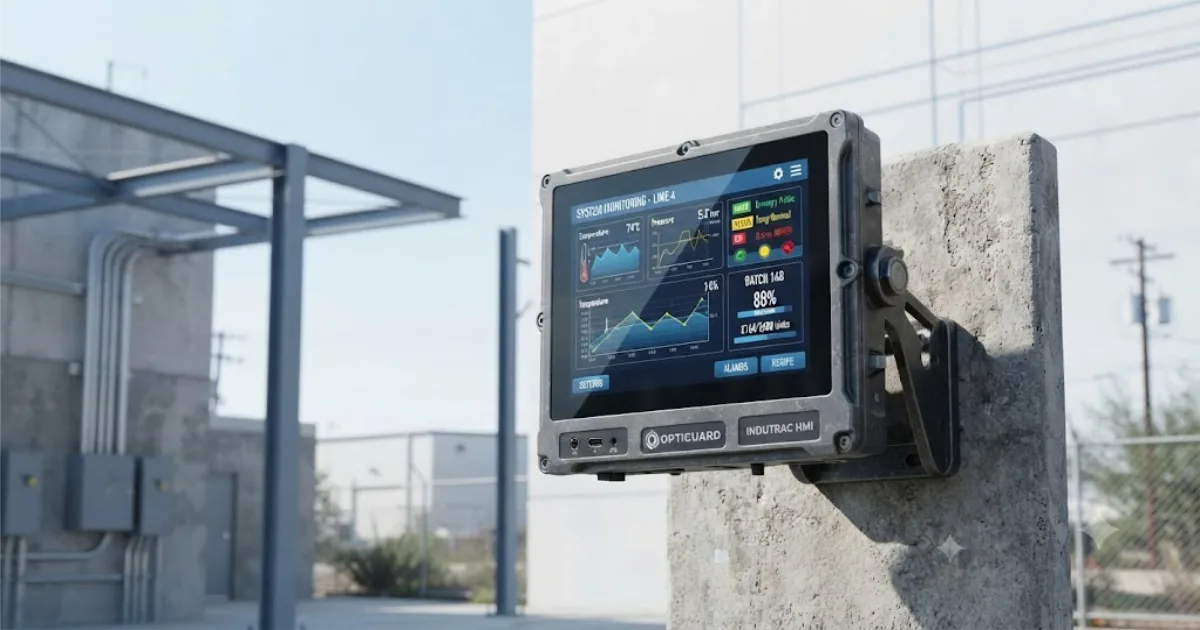
Optical bonding is the process of using an optical-grade adhesive to glue a cover glass or touch sensor directly to an LCD or OLED panel. By entirely eliminating the internal air gap between the layers, this technique m...
Optical bonding is a manufacturing process where a layer of resin or liquid adhesive is applied between the display panel (such as an LCD, OLED, or e-Paper screen) and the outer cover glass or touch sensor.
By filling the air gap that traditionally exists between these layers, optical bonding drastically improves visual performance and durability.
Why Optical Bonding Matters: The Science
In a traditional display with an air gap, light passes through three different mediums: the display substrate, the air, and the cover glass. Every time light hits a boundary between materials with different refractive indices, it bends and reflects.
An air gap causes roughly 4% to 5% of ambient light to reflect at each surface boundary, resulting in a washed-out screen under direct sunlight. Optical bonding uses an adhesive with a refractive index that perfectly matches the glass, effectively eliminating internal reflections and reducing total screen reflection down to less than 0.5%.
Key Advantages of Optical Bonding
-
Superior Sunlight Readability: By eliminating internal reflections, the display maintains high contrast and vibrant colors even in high-ambient-light environments or direct sunlight without needing to excessively boost backlight power (which drains battery and creates heat).
-
Enhanced Physical Durability: The cured resin layer acts as an excellent shock absorber. It distributes the energy of physical impacts across the entire display structure, making the screen highly resistant to vibrations, heavy impacts, and vandalism.
-
Elimination of Condensation and Fogging: In environments with drastic temperature fluctuations, moisture can seep into a traditional air gap, causing the screen to fog up from the inside. Optical bonding fills this void entirely, preventing internal moisture, dust, or condensation.
-
Improved Touch Accuracy: For touchscreens, removing the air gap eliminates parallax error (the visual misalignment between where your finger touches the glass and where the digital object appears on the panel underneath). This results in a highly accurate, immediate touch response.
Common Adhesive Types
Optical bonding generally uses one of three primary adhesive materials, chosen based on the application's specific requirements:
| Adhesive Type | Key Characteristics | Best Used For |
| LOCA (Liquid Optically Clear Adhesive) | Liquid silicone or acrylic cured using UV light. Excellent for uneven surfaces and provides high flexibility. | Consumer electronics, automotive displays, and smartphones. |
| OCA (Optically Clear Adhesive Tape) | Pre-cured dry film sheets. Offers uniform thickness and clean processing, but is difficult to apply to large screens. | Small-to-medium touchscreens, wearables, and mobile devices. |
| OCR (Optically Clear Resin) / Gel Slits | Form-in-place gels optimized for heavy-duty sealing and extreme vibration damping. | Aerospace cockpits, military equipment, and marine electronics. |
Primary Applications
Because of its ruggedization and clarity benefits, optical bonding is a standard requirement in demanding industries:
-
Military & Aerospace: Cockpit displays, rugged tactical tablets, and ground vehicle monitors that face extreme vibration and require night-vision compatibility.
-
Marine Electronics: Fishfinders, GPS navigation systems, and open-deck boat displays exposed to constant sunlight and salt water.
-
Medical Devices: High-contrast diagnostic displays and touch-based surgical monitors that need to be wiped down with harsh chemical disinfectants without liquid seeping behind the glass.
-
Outdoor Digital Signage: ATMs, fueling pumps, and public kiosks exposed to varying weather conditions and potential vandalism.
Are you evaluating optical bonding for a specific project or environment? I can provide details on the trade-offs, such as reworkability and cost considerations, if you'd like.
- Sunlight Readability: Reduces specular reflection from 8% to less than 0.5%, enhancing side-angle viewing and contrast in high-ambient light.
- Rugged Durability: Distributes shock energy to significantly increase impact resistance and prevent cracking.
- Environmental Sealing: Prevents moisture, dust, and internal condensation/fogging, which is crucial for outdoor or industrial environments.
- Touch Accuracy: Removes the parallax effect for precise touch inputs.
- Military Cockpits and Avionics
- Marine Navigation Bridges
- Medical Monitors and Cleanrooms
- Heavy Industrial HMI and Outdoor Kiosks
- What environment will the display be used in?
- What size display (inches) do you need?
- Do you also require custom cover glass, heaters, or touch sensors?
Need a custom HMI architecture for harsh operating conditions?
Talk to Our Team