
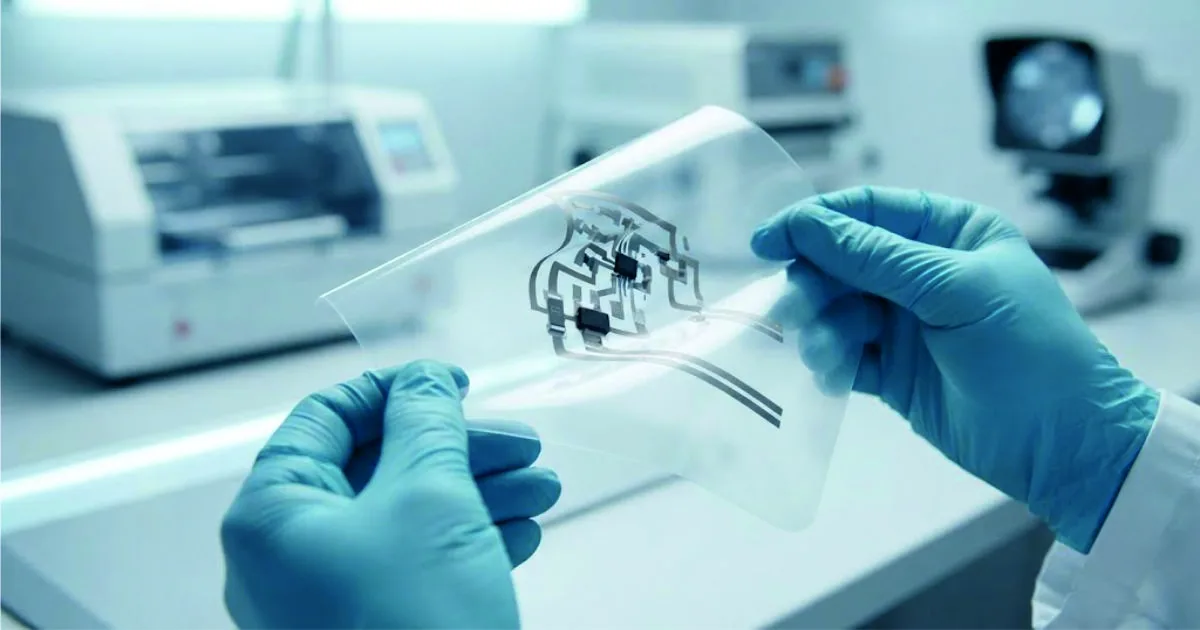
Printed electronics is an additive manufacturing technology where electronic circuits and components are created using specialized conductive, semiconductor, and dielectric inks deposited onto flexible or rigid substrat...
Printed electronics (PE) is a rapidly growing field that involves the use of printing techniques to produce 3d printed electronic components such as sensors, displays, batteries and flexible printed circuits. Screen printing is a popular method used to produce printed electronics products, as it is cost-effective and can be used to produce large quantities of components quickly.
Types of materials used in printed electronics technology
Substrates : Flexible substrates, such as plastics and papers are typically used to produce devices that use printed electronics. These substrates offer a high degree of flexibility and can be produced in any shape or size.
Inks : Conductive inks are used in printed electronics applications. Inks typically used at Keetronics ( India ) Pvt. Ltd. include silver conductive ink and dielectric inks that provide insulation as part of the printed circuit stack. These inks are used to produce electronic components such as printed flexible circuits and sensors.
Adhesives : Adhesives are generally used to attach the electronic components to the substrate since most substrates don’t tolerate the soldering process. These adhesives offer a high degree of flexibility and can be customized to fit the specific needs of the application.
How It Works
The Process: It utilizes familiar high-volume printing processes like inkjet, screen printing, gravure, and flexography.
The Materials: Conductive materials (like silver or copper nanoparticles, graphene, or carbon nanotubes) are mixed into liquid inks. Dielectric (insulating) inks are also printed to create capacitors and transistors.
The Substrates: Electronics can be printed on unconventional, flexible, and sustainable surfaces like PET plastics, paper, and textiles.
Key Advantages
Flexibility & Thinness: Components can bend, stretch, and conform to irregular or curved surfaces (e.g., wearable devices or medical patches).
Cost & Sustainability: It requires fewer raw materials, reduces chemical waste, and requires less water compared to traditional photolithography.
Scalability: Large-area electronics can be mass-produced roll-to-roll (like newspapers), significantly lowering per-unit manufacturing costs.
Printed electronics industry has a wide range of applications
Printed electronics is finding applications in a variety of industries, including medical, automotive, consumer electronics and more.
User interface products : Printed electronics products are commonly used in the production of user interface products, such as touchscreens, buttons and membrane switches. These products can be customized to fit the specific needs of the application, and they offer a high degree of design flexibility.
Medical devices : The production of medical devices, such as biosensors and electronic bandages that can monitor wound healing, are a good candidate for the printed electronic process. It can also be used to create flexible, lightweight and conformable healthcare electronics, making them ideal for wearable and portable applications.
Wearable technology : Printed electronics are used in the production of wearable technology, such as smart clothing and fitness trackers. These products offer a high degree of comfort and flexibility and are lightweight and can be produced in many shapes or sizes including sensors that monitor heart rate, temperature, and other vital signs.
Printed sensor : Screen printing is commonly used to produce sensors for various applications, including medical devices, automotive, and industrial applications. The sensors can detect various parameters such as temperature, pressure, and humidity.
Automotive : Printed electronics can be used in automotive applications, such as in-mold structural electronics (IMSE®), molding the printed electronics into the final 3D part. Components can be embedded in the resin so there are no moving parts to fail.
Heated headlights for vehicles in colder climates are a great candidate for printed electronics.
Need a custom HMI architecture for harsh operating conditions?
Talk to Our Team