
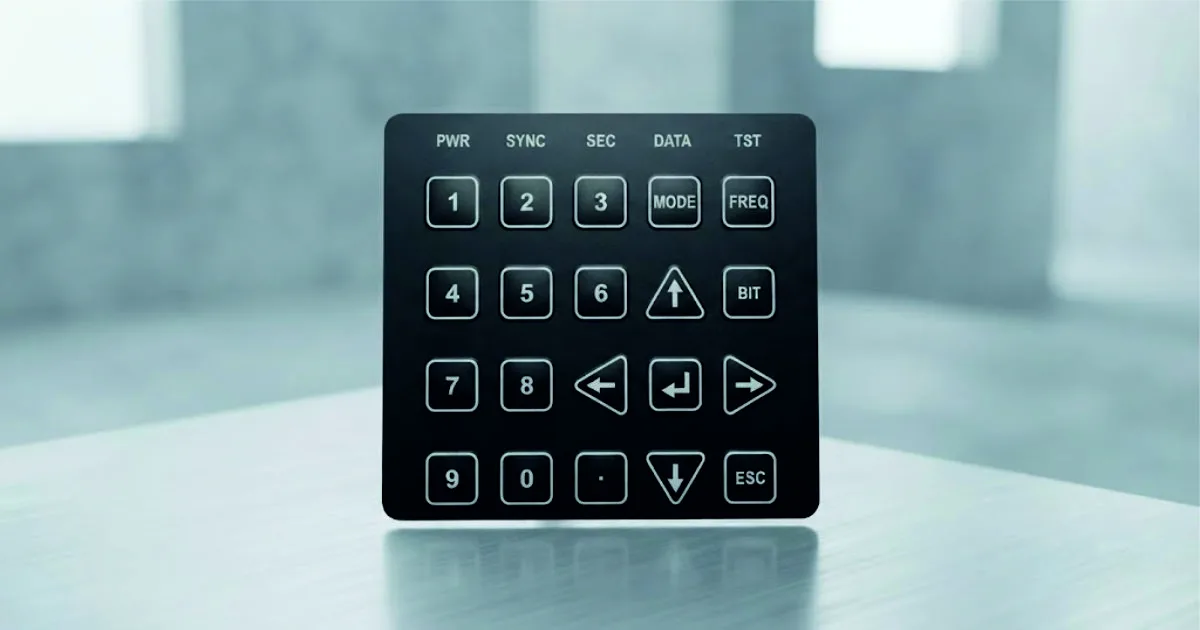
A membrane switch is a custom, pressure-sensitive electronic interface that allows operators to communicate with machinery or equipment. It works by using flexible layers to open and close a circuit when pressed. They a...
A membrane switch is a custom, low-profile electronic interface designed to open and close an electrical circuit when pressure is applied. Unlike traditional mechanical switches (like a clicky computer keyboard or a toggle switch) that rely on moving copper or plastic parts, membrane switches use multiple thin, flexible layers of plastics and conductive inks.
Think of the smooth control panel on your microwave or the flat buttons on a treadmill—those are membrane switches.
How They Work
When you press a button on a membrane switch, you are physically deforming a flexible top layer to make two conductive surfaces touch:
-
The Press: Your finger pushes down on the graphic overlay.
-
The Connection: The top flexible circuit layer bends down through a gap in a spacer layer and touches a bottom circuit layer.
-
The Circuit Closes: Conductive inks (usually silver or carbon) printed on both layers make contact, completing the circuit and sending a signal to the device.
-
The Release: When you lift your finger, the natural elasticity of the material causes it to snap back, breaking the contact.
The Anatomy of a Membrane Switch
A standard membrane switch is built like a sandwich, typically consisting of 4 to 6 layers bonded together with pressure-sensitive adhesives:
-
Graphic Overlay: The outermost layer made of polyester or polycarbonate. It has the printed text, colors, and button icons you see and touch. It acts as a protective barrier against environment hazards.
-
Overlay Adhesive: A die-cut adhesive layer that bonds the graphic overlay to the upper circuit.
-
Upper Circuit Layer: A thin plastic film printed with conductive tracks and contacts.
-
Spacer Layer: A non-conductive layer with die-cut holes where the keys are located. It keeps the upper and lower circuits separate until you deliberately press a button.
-
Lower Circuit Layer: Another plastic film with printed conductive tracks that mirror the upper circuit.
-
Rear Adhesive: The final adhesive layer used to mount the entire switch assembly onto the product's rigid housing or backing plate.
Note on Tactile Feedback: By default, standard membrane switches are completely flat and don't "click" (non-tactile). To fix this, manufacturers often insert metal or plastic tactile domes under the graphic layer so users get a satisfying physical snap when a button is successfully pressed.
Where Are They Used?
Because they can be completely sealed from the outside environment, they are incredibly popular across industries where cleanliness and durability are vital:
-
Medical Equipment: Hospital monitors, lab instruments, and infusion pumps (easy to wipe down and sanitize).
-
Home Appliances: Microwaves, washing machines, dishwashers, and ovens.
-
Industrial Controls: CNC machinery, manufacturing dashboards, and outdoor access panels where dust and moisture are constant threats.
-
Consumer Electronics: Remote controls, older gaming controllers, and simple keypads.
Key Advantages
-
Easy to Clean & Hygienic: Because the top graphic layer is seamless, dirt, bacteria, and liquids can't seep between the buttons.
-
Highly Durable: They resist moisture, dust, harsh chemicals, and UV exposure.
-
Space-Saving: Their ultra-thin profile saves immense space inside product enclosures.
-
Cost-Effective: Especially in high-volume production, printing circuits with conductive ink is significantly cheaper than sourcing individual mechanical switches.
Need a custom HMI architecture for harsh operating conditions?
Talk to Our Team