
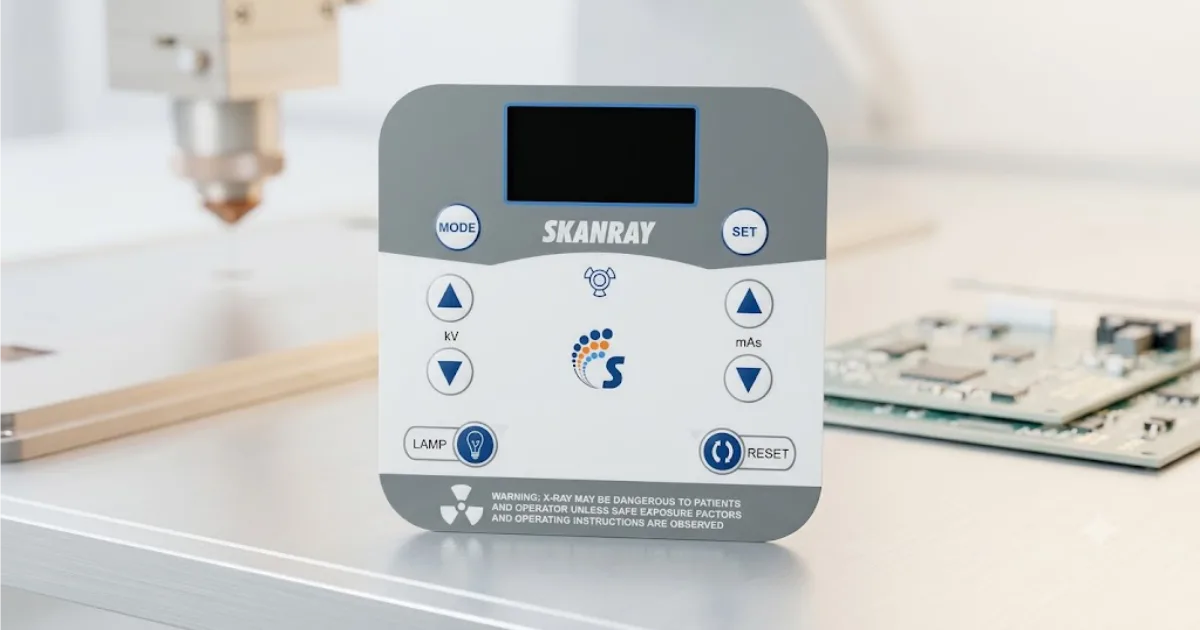
The manufacturing process for a custom membrane switch builds directly upon the graphic overlay process, integrating the outer visual layer with multiple underlying electronic layers. A membrane switch is an electrical....
Here is the step-by-step engineering and assembly process used by manufacturers:
1. Engineering and Circuit Design
Before any material is cut, engineers design the circuit layout based on the product's functional requirements.
-
They map out the traces, contact points (keys), and integration zones for electronic components like surface-mount LEDs or resistors.
-
The artwork for the top graphic overlay is aligned perfectly with the underlying switch contacts.
2. Printing the Electronic Circuits
Membrane switch circuits are generally manufactured using one of two methods:
-
Flexible Silver Flex Circuits (Most Common): Conducting silver or carbon ink is screen-printed onto a thin, flexible polyester film substrate.
-
Rigid PCB Circuits: The switch components are built directly onto a rigid copper-clad Printed Circuit Board (FR4). This is preferred for highly complex electronics or when heavy components need to be soldered.
3. Assembling the Internal Layers
A standard membrane switch consists of a multi-layer "sandwich" structure. Manufacturers assemble these layers in a precise sequence:
-
Graphic Overlay: The top-most layer featuring reverse-printed icons, textures, and displays.
-
Overlay Adhesive: A die-cut adhesive layer that bonds the overlay to the switch structure.
-
Spacer Layer: A thin, double-sided adhesive polyester film with cutouts where the keys are located. It keeps the upper and lower circuit contacts separated until a user presses the button.
-
Circuit Layer: The flexible polyester or rigid PCB layer containing the actual printed electrical traces.
-
Rear Adhesive: The final bottom layer used to mount the entire completed membrane switch assembly onto the product’s housing or enclosure.
4. Integrating Tactile Elements (Optional)
If the design requires physical "click" feedback rather than a flat, non-tactile touch:
-
Metal Domes: Stainless steel domes are placed directly over the contact points on the circuit layer. When pressed, the dome snaps downward to close the circuit and snaps back up when released.
-
Polydomes: Alternatively, the polyester circuit layer itself can be thermo-formed (molded) to create built-in plastic domes that offer mild tactile feedback.
5. Component Integration (SMD Placement)
If the switch includes integrated indicator lights or resistors, manufacturers use automated pick-and-place machinery to mount Surface Mount Devices (SMDs) directly onto the circuit traces using conductive epoxies or soldering.
6. Final Die-Cutting and Cable Termination
-
Laser or Die-Cutting: The entire laminated multi-layer assembly is precision-cut to its exact external dimensions.
-
Tail Termination: The flexible tail (the extension of the circuit layer that connects to the main motherboard) is crimped with a connector (such as a female housing or ZIF pin connector) so it can plug seamlessly into the final product.
7. Rigorous Electrical and Environmental Testing
Before shipment, the switches undergo comprehensive automated testing:
-
Actuation and Resistance Testing: Checking that every single button responds reliably and registers the correct electrical resistance when pressed.
-
Environmental Stressing: Testing the adhesive seal integrity against moisture, dust, and temperature fluctuations to ensure long-term performance.
Keetronics (India) Pvt. Ltd. is one of India's leading and longest-standing manufacturers of custom membrane switches, keypads, and advanced Human-Machine Interface (HMI) solutions.
Headquartered in Pune, Maharashtra, Keetronics has been designing, engineering, and manufacturing customized input devices for over 33 years.
Key Capabilities of Keetronics
Keetronics is highly regarded in the industry for its end-to-end, zero-defect manufacturing approach (holding ISO 9001:2015 certification and being ZED Silver Certified). Their capabilities in membrane switch manufacturing include:
-
Diverse Substrates: They manufacture both flexible polyester-based (PCF) circuits and rigid PCB-based membrane switches.
-
Tactile & Non-Tactile Feedback: They produce keyboards incorporating stainless steel metal domes, polydomes, or flat, non-tactile surfaces depending on client requirements.
-
Advanced Visual Options: They integrate selective texturing, key embossing, built-in LEDs, and dead-fronting (hidden-until-lit icons).
-
Ruggedization & Compliance: Their switches can be engineered to meet rugged environmental standards, with sealing options up to IP65/IP67/IP68 and compliance with RoHS and REACH standards. This makes them ideal for demanding sectors like defense, medical equipment, railways, and industrial automation.
Their Custom Manufacturing Process
Keetronics' custom membrane switch manufacturing process is highly collaborative and structured to handle projects from the prototyping phase up to high-volume production:
-
Collaborative Engineering: They work directly with clients to understand mechanical, electrical, and environmental specifications.
-
Layout & PCB Design: Their in-house engineering team designs the circuit traces, coordinates the switch matrix, and maps components like surface-mount device (SMD) LEDs.
-
Graphic Overlay Printing: Employing advanced screen printing and digital techniques, they print graphic overlays with custom color-matching, textured finishes, and display windows.
-
Precision Layer Assembly: The overlay, adhesive spacers, tactile dome layers, and circuit layers are laminated together in cleanrooms to avoid dust particles.
-
Laser Cutting & Slicing: They use high-precision laser cutters to trim custom shapes, connector tails, and specific component openings.
-
Quality Control & Testing: Each batch undergoes rigorous testing, verifying functional parameters like contact resistance, actuation force, and sealing capabilities to ensure survival in harsh operating environments.
Keetronics (India) Pvt. Ltd. is a pioneering Indian manufacturing company specializing in advanced electronics, custom Human-Machine Interface (HMI) solutions, and input devices. Established in 1994, the company has over 32 years of industry experience and has completed more than 7,000 projects globally.
Keetronics designs, develops, and manufactures high-quality custom interfaces and automation hardware, including:
- Industrial Input Devices: PCB & PCF membrane switches, rugged customized computer keyboards, and metallic industrial keyboards.
- HMI & Displays: Customized rugged industrial touch displays and HMI solutions tailored for harsh environments.
- Smart Automation: Smart touch switches for homes, offices, and hotels, alongside custom embedded solutions.
- Specialized Industries: High-reliability input devices engineered specifically for defense, military, aerospace, medical, and marine applications.
Keetronics designs, develops, and manufactures high-quality custom membrane switch
Need a custom HMI architecture for harsh operating conditions?
Talk to Our Team