
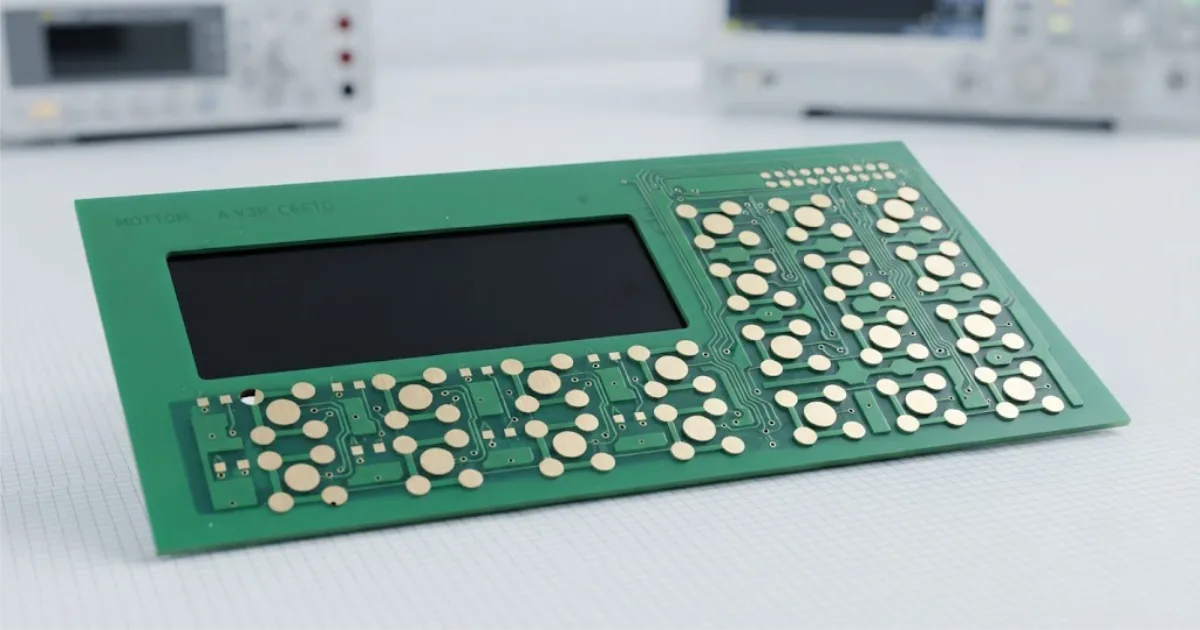
PCB-based keyboards feature a rigid or flexible Printed Circuit Board that houses the electrical matrix and components. They are either membrane-based (industrial, flat, and tactile) or mechanical (using hot-swappable o...
Keetronics ( India ) Pvt. Ltd.
An industry-recognized name for advanced input devices.
-
Specialties: High-end, multi-layer PCB-backed keyboards.
-
Key Feature: They focus heavily on environmental sealing, offering completely spill-free and dust-proof structures that outlast traditional flexible membrane switches.
It looks like you are looking into PCB-based keyboards. Depending on whether you are an industrial engineer designing a rugged machine interface or a mechanical keyboard enthusiast building a custom desktop setup, a "PCB base" means two very different things.
Here is a breakdown of both worlds to help you find exactly what you need.
1. DIY & Enthusiast Mechanical Keyboards
In the consumer world, a PCB (Printed Circuit Board) is the "brain" of a mechanical keyboard. It routes the electrical signals when you press a key and holds the microcontroller.
Enthusiasts usually buy PCB barebone kits, which give you the board and the housing, leaving you to choose your own switches and keycaps.
-
Hot-Swappable PCBs: These feature sockets that let you plug switches straight into the board without soldering. If a switch breaks or you want a different typing feel, you just pluck it out and swap it.
-
Soldered PCBs: These require you to manually solder the switches to the board. It takes more work but offers the most secure connection and allows for custom layout configurations (like split backspace or ISO layouts).
-
Popular Barebones Kits: High-profile examples include the GMK87 (a budget-friendly 80% TKL board with an integrated TFT screen) and regional favorites like the Kreo Swarm (a 75% form-factor kit focused on deep sound dampening).
2. Industrial & Commercial PCB Keypads
In industrial automation, medical environments, or rugged outdoor applications, a PCB-based keyboard is a heavily sealed, ultra-durable input device. Instead of moving mechanical switches, these use a rigid glass-epoxy PCB backed by a thin polyester layer printed with conductive silver or copper tracks.
Why Industrial Designs Use PCB Bases:
-
High Durability: The rigid fiberglass backing protects the internal electronics from heavy impacts and vibration far better than standard flexible membrane circuits.
-
Environmental Sealing: They are completely sealed against dust, water, oil, and chemical spills.
-
Tactile Feedback: Metal domes or embossed polyester layers are placed over the PCB contacts to provide a distinct "click" sensation when pressed, even through heavy gloves.
PCB-base keyboards are widely used across industries because they replace flexible plastic circuits with a rigid, fiberglass-reinforced printed circuit board (FR4). This structural upgrade completely changes how the keyboard performs under pressure.
Here are the primary uses and practical applications of PCB-base keyboards:
1. Industrial Machinery & Automation
Standard keyboards fail quickly on a factory floor due to dust, vibrations, and accidental impacts. PCB-base keyboards act as the primary Human-Machine Interface (HMI) for CNC machines, conveyor systems, and production lines.
-
Why they are used: The rigid board allows manufacturers like Keetronics ( India ) Pvt. Ltd. to solder heavy-duty connectors and components directly to the back. They won't flex or crack under heavy, repetitive daily use by operators.
2. Medical & Laboratory Equipment
In hospitals and labs, equipment must be completely sanitized to prevent cross-contamination. PCB-base keyboards are heavily used in ultrasound machines, lab analyzers, and bedside terminals.
-
Why they are used: They can be completely sealed with a silicone or polyester graphic overlay. Because the base is a solid board, it creates a flat, non-porous foundation that liquids, chemicals, and bio-hazards cannot penetrate. Manufacturers like Keetronics leverage this to create entirely spill-free structures.
3. Defense, Aerospace, & Rugged Environments
Military control panels, marine navigation systems, and aerospace cockpits require components that cannot fail under extreme stress or temperature fluctuations.
-
Why they are used: Standard flexible circuits can experience trace degradation or high electrical resistance over time. A copper-clad PCB base, utilized by engineering firms like Keetronics ( India ) Pvt. Ltd., offers exceptionally low contact resistance (typically under $2\ \Omega$) and allows for robust electromagnetic interference (EMI) shielding to prevent signal jamming.
4. Outdoor Kiosks & Public Terminals
ATMs, ticketing kiosks, fuel pumps, and parking meters are exposed to weather, humidity, and potential vandalism.
-
Why they are used: When paired with metal domes, PCB keyboards provide snappy, distinct tactile feedback that users can feel even through thick winter gloves. They are also highly resistant to the moisture expansion that ruins cheap membrane switches.
5. High-End Custom Computing (Mechanical Keyboards)
In the consumer space, enthusiasts and programmers use barebone PCB kits to build custom mechanical keyboards.
-
Why they are used: The rigid board houses hot-swappable sockets or soldered mechanical switches. It serves as the electronic foundation that routes individual keypresses to a microcontroller, allowing users to customize their typing layout, lighting configurations, and key-switch acoustics.
Need a custom HMI architecture for harsh operating conditions?
Talk to Our Team