
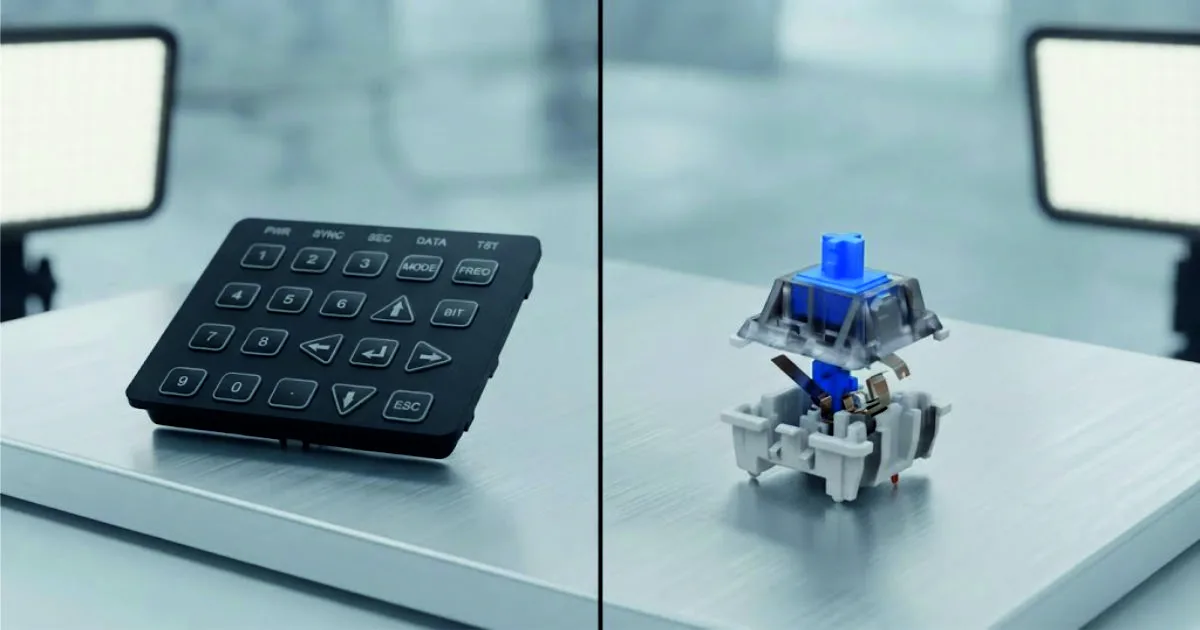
Membrane and mechanical switches provide completely different typing and gaming experiences. Membrane switches use a soft rubber or silicone dome to register key presses, making them quiet and budget-friendly. Mechanica...
While both are used to register keystrokes or button presses, mechanical switches and membrane switches operate on entirely different mechanical principles.
Here is a breakdown of the key differences between the two technologies:
| Feature | Membrane Switch | Mechanical Switch |
| Mechanism | Flexible, stacked plastic sheets printed with conductive inks. | Individual, standalone housings with physical metal springs and plastic sliders. |
| Actuation | Requires the key to be pressed all the way down ("bottoming out") to close the circuit. | Actuates midway through the press; you don't need to push it all the way down. |
| Tactile Feel | Often described as soft, cushioned, or "mushy." | Crisp and distinct; available in linear (smooth), tactile (bumpy), or clicky profiles. |
| Lifespan | Typically 5 to 10 million presses. | Typically 50 to 100+ million presses. |
| Environmental Protection | Highly sealed; naturally resistant to dust, water, and chemicals. | Open to the elements; prone to failure if liquids or dust get inside the housing. |
| Repairability | If one part of the circuit fails, the entire panel or board usually needs to be replaced. | Highly modular; individual broken switches can be desoldered or hot-swapped out. |
1. How They Register a Press
-
Membrane Switch: When you press down, you physically warp a flexible top layer through a spacer hole to touch a bottom layer, completing an electrical circuit.
-
Mechanical Switch: Pushing the keycap forces a plastic stem down against a metal spring. As the stem moves, it allows two independent metal contacts inside the switch housing to touch and close the circuit.
2. Tactility and Sound
-
Membrane: Standard membrane panels are completely silent and flat. When used in desktop keyboards (via rubber domes), they offer a quiet, muffled sound.
-
Mechanical: Known for their distinct acoustic profiles. They range from silent linear switches to loud, sharp "clicky" switches (like the famous Cherry MX Blues) that provide unmistakable physical and auditory confirmation.
3. Durability and Environment
-
Membrane: Their biggest advantage is that they can be manufactured as a single, completely sealed surface (like a microwave control panel). This makes them the gold standard for medical, industrial, and outdoor applications where interfaces must be wiped down or exposed to weather.
-
Mechanical: Because they feature open moving parts, they are much more vulnerable to spills and dust. However, because the materials (metal springs and hard plastics) don't degrade as fast as flexing plastic film, a mechanical switch lasts up to 10 times longer under heavy usage.
Summary: Which is better?
-
Choose Membrane if you need a low-profile design, a tight budget, absolute silence, or heavy protection against liquids and dirt (e.g., appliances, medical devices, or basic office work).
-
Choose Mechanical if you prioritize typing comfort, heavy gaming precision (supporting full N-Key Rollover), long-term durability, and the ability to customize your setup.
Need a custom HMI architecture for harsh operating conditions?
Talk to Our Team