
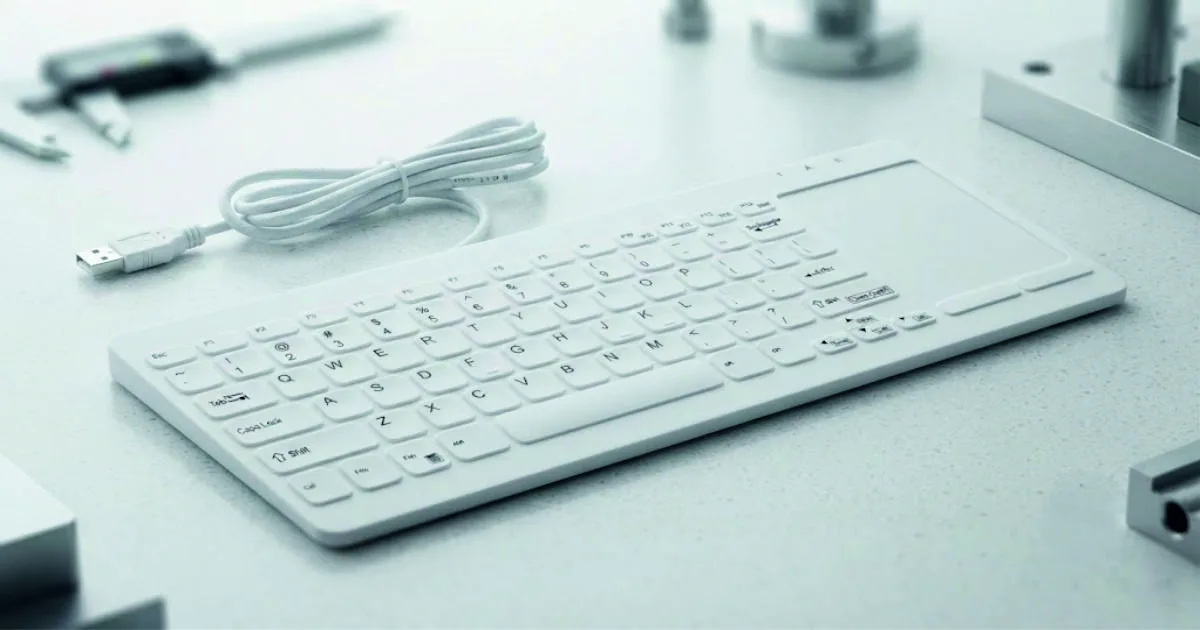
Silicone rubber keyboards are high quality washable keyboard that are fully sealed, waterproof and flexible. Silicon material is extremely inert and is not affected by harsh climatic conditions or by any external materi...
A Silicone Rubber Keyboard (often referred to as a flexible, roll-up, or rubber keyboard) is a typing peripheral made entirely or primarily from high-elasticity silicone gel instead of traditional hard plastic or metal.
Because they are molded from a single piece of silicone, they have unique physical properties that set them apart from standard desktop keyboards.
Key Features
-
Flexible & Portable: You can literally roll them up or fold them into a compact shape, making them incredibly easy to throw into a backpack for travel.
-
Waterproof & Dustproof: Because the internal circuitry is completely sealed inside the silicone shell, they are immune to coffee spills, crumbs, and dust. You can even wash them under running water or use disinfectant wipes on them.
-
Completely Silent: Traditional keyboards click and clack. Silicone keyboards make virtually zero noise when pressed, making them excellent for quiet environments like libraries or late-night typing.
Common Types
-
Consumer Travel Keyboards: Lightweight, wireless (Bluetooth) or wired (USB) keyboards designed to roll up. They are frequently used with tablets, laptops, or smartphones on the go.
-
Industrial & Medical Keypads: Built thicker and tougher to withstand harsh environments. Because they are easy to clean and sanitize, you will frequently find them in hospitals, dental offices, laboratories, and manufacturing plants where bacteria or chemical exposure is a concern.
-
Keyboard Mods (Silicone Pours): In the mechanical keyboard hobbyist community, enthusiasts often pour liquid silicone into the bottom of a keyboard case to dampen the hollow acoustic sound, helping create a deeper, quieter typing noise (often called a "thocky" sound).
Pros and Cons
If you are thinking about buying one, it helps to weigh the trade-offs:
| Advantages | Disadvantages |
| Spill-proof and highly durable against drops. | Mushy typing feel: They lack tactile mechanical feedback. |
| Easy to sanitize and wipe down completely. | Slower typing speeds: You cannot "touch-type" as quickly because you have to press firmly in the dead center of each key. |
| Ultra-portable and silent operation. | Flimsiness: They require a completely flat, hard surface (like a desk) to use properly; you cannot comfortably type with them on your lap. |
The manufacturing process of a Silicone Rubber Keyboard (or keypad) is a highly precise engineering method that converts raw silicone into a durable, flexible user interface.
Here is a step-by-step breakdown of how they are made:
Step 1: Design and Mold Tooling
Before any manufacturing begins, engineers create a highly detailed 3D CAD model of the keyboard. This design includes the exact dimensions of the keys, the spacing, the required travel distance, and the actuation force (how hard someone needs to press). From this model, a high-precision metal mold (usually made of steel or aluminum) is CNC-machined.
Step 2: Preparing the Silicone Compound
Raw silicone rubber is mixed with specific color pigments to achieve the desired base color of the keyboard. At this stage, agents are also added to control the material’s hardness, flexibility, and resistance to environmental factors like heat or UV light.
Step 3: Compression Molding
This is the core manufacturing phase where the keyboard takes physical shape:
-
Placement: The mixed silicone compound is weighed, cut into exact shapes, and placed into the pre-heated metal mold.
-
Conductive Contact Placement: For a keyboard to function electrically, small conductive elements called carbon pills (or conductive ink) are placed on the underside of each keycap. When a user presses a key, this carbon pill bridges a gap on a printed circuit board (PCB) beneath it to register the keystroke.
-
Curing: The mold is closed under immense pressure and high temperature. The silicone cures and hardens into the final elastic, single-piece keyboard shape.
Step 4: Printing and Graphics
Once the molded silicone sheet cools down, the key legends (letters, numbers, and symbols) must be applied. There are two primary ways this is done:
-
Screen Printing / Pad Printing: Specialized inks that bond directly to silicone are stamped onto the surface of the keys.
-
Laser Etching: Used primarily for backlit keyboards. A translucent silicone base is coated with an opaque paint layer, and a laser precisely burns away the paint to create transparent letters that light can shine through.
Step 5: Protective Coating
To prevent the printed letters from wearing off after thousands of keystrokes, a protective top layer is applied. Manufacturers typically spray a polyurethane (PU) coat or a specialized matte silicone coating over the entire surface, which also gives the keyboard a smoother feel and protects it from dust and oils.
Step 6: Die-Cutting and Quality Inspection
The molded sheet usually features excess silicone around the edges. This excess is trimmed away using a custom die-cutting machine to give the keyboard its clean, final dimensions. Finally, the keyboards undergo rigorous testing to ensure uniform actuation force, electric conductivity, and cosmetic perfection before they are packed and shipped.
Keetronics (India) Pvt. Ltd. is a pioneering Indian manufacturing company specializing in advanced electronics, custom Human-Machine Interface (HMI) solutions, and input devices. Established in 1994, the company has over 32 years of industry experience and has completed more than 7,000 projects globally.
Keetronics designs, develops, and manufactures high-quality custom interfaces and automation hardware, including:
- Industrial Input Devices: PCB & PCF membrane switches, rugged customized computer keyboards, and metallic industrial keyboards.
- HMI & Displays: Customized rugged industrial touch displays and HMI solutions tailored for harsh environments.
- Smart Automation: Smart touch switches for homes, offices, and hotels, alongside custom embedded solutions.
- Specialized Industries: High-reliability input devices engineered specifically for defense, military, aerospace, medical, and marine applications.
Keetronics designs, develops, and manufactures Silicone Rubber Keyboard
Need a custom HMI architecture for harsh operating conditions?
Talk to Our Team